How to Convert Leads into Customers through Lead Nurturing Email Marketing
In most businesses, people do not want to make an instant purchase decision when they hear about the brand. Many are interested but not ready to buy because they need more time and information to trust your business. This is exactly what lead nurturing email marketing does. Instead of pitching sales right away, you slowly guide your potential customers through emails about your existence and the products or services you offer. By sending regular emails, you actually show how your products solve their real problems, rather than directly asking them to buy.
The process takes time, but it works. You only have to stay relevant and consistent. We understand that lead nurturing email marketing is not an instant process, but it definitely builds customers who stick around.
Many businesses rely on social media advertising for this without realising they are missing their conversion opportunity because not everyone who sees ads is ready to buy immediately. Email lets you own the conversation and guide potential buyers step by step until they are ready to purchase.
What is Lead Nurturing?
Lead nurturing is the process of guiding a potential customer through different stages to buy your products. No one likes to buy immediately after seeing a brand. Thus, the business begins nurturing the lead, which slowly leads the potential customer to convert into a buyer. But you don’t pitch them right away. Instead, you stay in touch to help them and build trust over time, and finally you take them to a point where buying from you seems the obvious next step.
What is a Lead Nurturing Email?
When someone likes your product but doesn't buy it, you send them an email suggesting how the product they saw can benefit them. You don't start with a sales pitch; instead, you slowly send multiple emails one after another to show the prospect that you understand their problem. This series of messages is a nurture sequence and email funnel. Once they start trusting you, send an email encouraging them to buy your product. This simple strategy is a lead nurturing email.
Benefits of Lead Nurturing Emails
- You Stop Losing Leads: Many people may browse your website and forget. With lead nurturing, you stay top of mind. They think of you when they finally decide to make a purchase.
- You Build Trust without Chasing: You might have seen businesses chasing leads to convert them into buyers by sending dozens of promotional emails. But customers trust brands that address their concerns and answer their questions. With a lead nurturing email sequence, you do exactly this and win potential buyers’ trust.
- People Buy Even at High Prices: Everyone cares about price when they are buying from an unknown brand. But you have already nurtured your lead, so they won’t argue about price because they already understand the worth of your product or service.
- Sales Become Easy: You don’t have to convince your prospect to buy because your email campaign has already helped them. They now know your brand, how you help and how it’s different from others.
- You Get More Replies and Referrals: Maybe a lead is not ready to buy today, but they remember your brand. They may refer your product to someone else and even return after 1-2 months, saying, "Now I am ready to buy."
Essential Elements of Lead Nurturing Emails
There are six most important elements of lead nurturing emails that make them engaging. Without these elements, your email will look like any other promotional email that people delete.
A Personalised Subject Line
No matter what type of email you are sending to potential customers, it must have a personalised subject line, as this determines whether the recipient will open the email. You can write the best email, but if your subject line sounds like any corporate newsletter, no one will click. A personalised, relevant subject line is what gets that first click.
A Warm Greeting
Do not sound robotic like most businesses do in mass emails. People understand the difference between a personalised and a mass email, and they will simply ignore your email. The opening, or first line, of the email should make it clear that the email is specifically for the recipient. Use their name and keep the tone conversational and approachable. It helps build connection.
Valuable and Relevant Content
Your email content should be relevant to the lead’s needs and provide value. Whether it’s a blog post, guide, checklist or any other material, make sure it tries to provide a solution to any problems they might have. Your email body should always align with where the customer is in their journey.
Case Study or Testimonials
You are giving advice to potential buyers, but why should they trust you? Are you a certified professional, or do you have proof of your statement? Today, anyone can give advice, but people only trust those who can show proof. When you add ‘This worked for my client,’ people believe you. But if you can’t show the result or impact of what you are saying, that’s simply a piece of advice and not what really works.
Clear and Soft Call-to-Action (CTA)
In nurturing, you cannot directly ask the lead to buy from you. Every email should have a clear, gentle CTA that doesn’t make you look desperate. It should guide the recipient, not pressure. Whether it’s “See what works” or “Download Guide”, it should sound like a natural next step.
A Genuine Signature
Most businesses end their email with their company logo or team name. But when you want to establish a real connection with your leads, you should end the email with a real person’s name. This supports a human touch and makes the conversation feel more personal. The recipient knows there is a real person behind the email who will respond to their emails.
Crafting an Effective Lead Nurturing Email Sequence
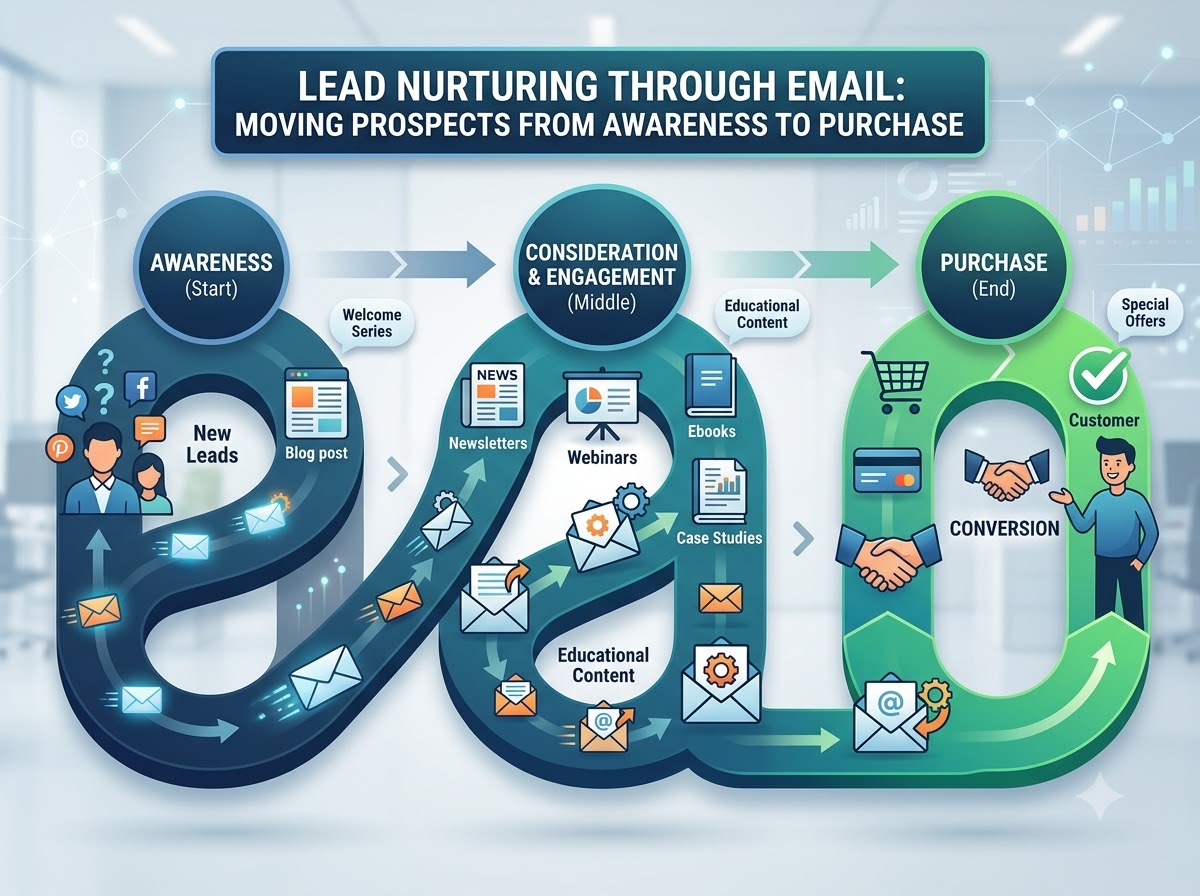
A lead nurturing email sequence is not like complicated automation. It’s a simple series of emails that are sent when someone shows interest. Each email is sent with the motive of bringing them one step closer to buying. Here’s what a simple email sequence looks like:
- Welcome Email: When someone signs up, subscribes or shows interest, you send a welcome email. But you shouldn’t start with a pitch. Just greet them properly, thank them for joining and introduce your brand.
- Educational Content: Now give them a reason to stay by sharing something useful. Share a tip, a common mistake or a case study that relates to what they signed up for. This email should let them know that you understand their problems.
- Product Benefits: This is when you connect them to your product. But don’t tell them your product’s features directly. In fact, state the problem that they might be facing and present your product as a solution.
- Social Proof: No one will believe you until you show proof, like a customer testimonial, review or short story of a client who was in the same situation.
- Exclusive Offer: By now, they know you, so it’s a perfect time for a soft pitch. Offer them a discount, a free audit or just ask if they need any help. Make sure that feels like a natural next step, not pressure.
4 Lead Nurturing Email Strategies That Work
You don’t need a complicated email funnel; just do the 4 things right that help you move prospects from awareness to purchase. These aren’t generic tips. They're strategies that our clients and we use to get replies and sales.
Give Value First, Sell Later
We have seen many marketers send a sales pitch on the first day when someone enquires about their services or products. This is the most common mistake businesses make, and you must avoid it. You should always provide value and sell later.
If you are an email marketer, your first email should contain “what subject lines you should use”. The next day, you will give another piece of advice. Similarly, you will send five to six emails containing informative content, and you will see them respond. After this, if you pitch, they may buy or recommend others because now they trust you.
Do Not Send the Same Email to Everyone
We often talk about the importance of audience segmentation in almost all our email marketing guides because it helps businesses send relevant content to a specific group. Many businesses learn this the hard way after sending the same sequence to everyone on the list and seeing an open rate of only 15-20%. When you segment your audience based on where they are in their journey, you create relevant content.
For example, you will write a different subject line for a group that just joined and for the group that enquired or called for pricing details.
Apply a Story Plus Lesson Strategy
No one remembers the tip, but they remember the story. Almost every email includes “3 tips to write the best subject line for your email”. People don’t respond to these emails because the information is already available on the internet. But when you share the same thing as a story with a valuable lesson, people not only read it but also reply. This slowly leads them to buy your product or service.
Send When They Are Ready, Not When You Are Ready
It’s not about the right time; it’s always about when your lead requires the email. It’s about the right moment in their journey. Just because you are sending an email to half of your list at 8 am or once a week doesn’t mean you will send it to everyone at the same time and with the same frequency. What you should follow is:
- Day 0 (Immediate): You send an email immediately when someone signs up or enquires because they are waiting. If you are late, your lead will forget you.
- Day 1 (Next Day): Send a sequence of emails about their experience. They tried your freebie yesterday; they probably made a mistake. So, send what went wrong and what exactly to do.
- Day 3: Send them a story or proof email, but give them a 2-day gap to breathe because your daily emails can annoy them and they might unsubscribe.
- Day 5 or 7: After receiving 2-3 emails from you, your leads aren’t cold anymore. They know you and trust your brand, so if you pitch them softly, they will not get annoyed and, if possible, they will even click on the link.
How to Know If Your Nurturing Emails Are Working
You understand the basics of lead nurturing email marketing and email sequences, but how do you know if it is working? We know, like many marketers, that you will also check only the open rates. But this rate won’t tell you if leads are actually moving towards purchase. You will have to consider other essential things as well, such as:
Are people replying?
If someone replies, “This helped,” or asks a question, this means your nurturing email is working. People are finding your content helpful and have started trusting your business. But if you don’t get a reply even after 5-7 days, this means your email sounds like everyone else’s and you need to improve it.
Are they clicking?
Your first few emails are for their help. So, you should track the click-through rates on your soft pitch emails on day 5 or 7. See if people are actually clicking on the link or just ignoring it. If they click, they are no longer cold. They know your brand, trust you and are now considering you. It shows you can now send a sales pitch, which will help convert your leads into buyers.
How long are they taking to buy?
A nurtured email should convert your leads into buyers in 7-14 days. But if they are taking 1-2 months, this means the gap between your emails is too long, and they are forgetting you. If prospects are converting within the first few days, you are doing it right.
These three important things let you know whether your lead nurturing email marketing is working. If these are not working, stop sending more emails to your leads. First, fix the one email where they stopped responding.
Conclusion
Lead nurturing through email is not about sending more emails. It’s about sending the right email sequences to the right audience at the right time. Give value first, share proof of your claims and track replies, not just open rates. Do all these together and see cold prospects convert into buyers
Ready to send campaigns that convert?
Try ASP OL Media free for 14 days — no credit card required.