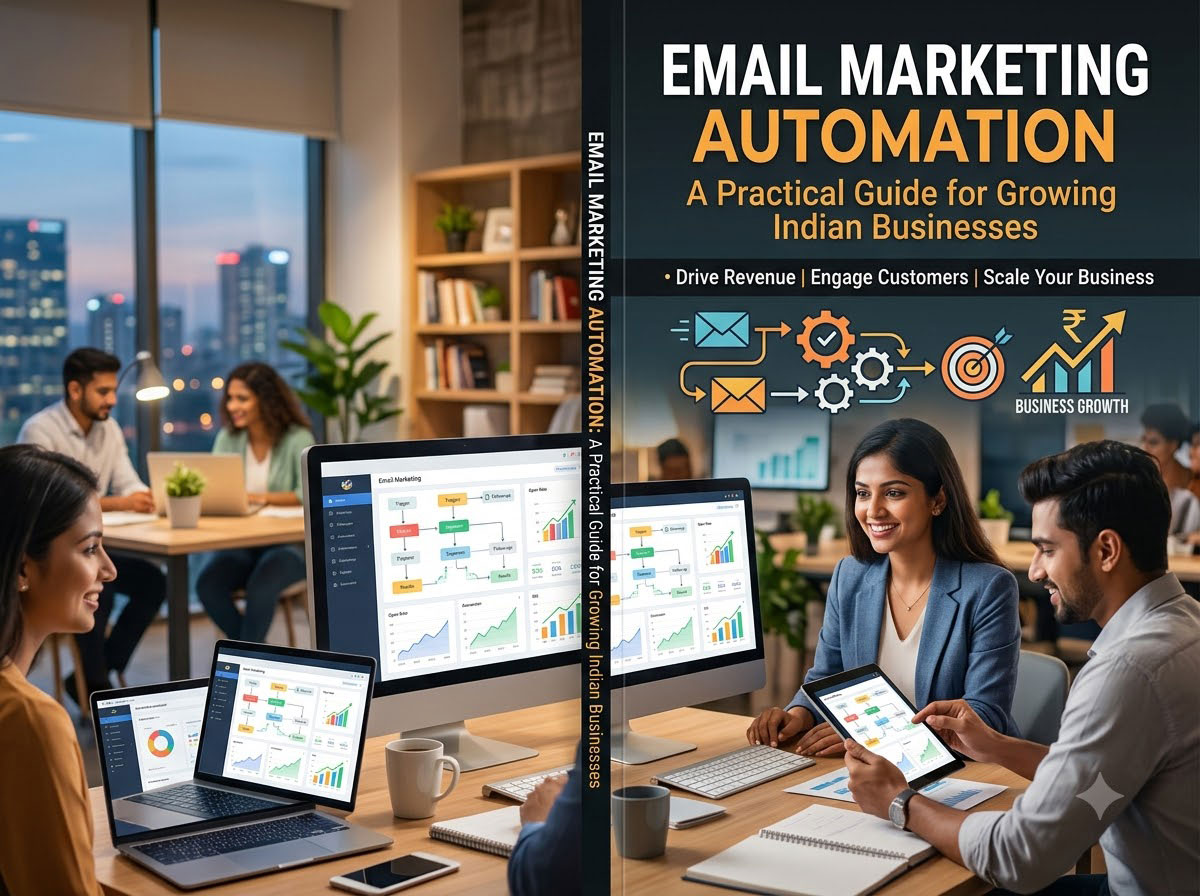
Email Marketing Automation: A Practical Guide for Growing Indian Businesses
Email marketing can become surprisingly powerful once you stop treating every email as a one-off campaign.
A good automation system works quietly in the background. When a customer signs up, something happens. When a buyer places an order, another message goes out. If a lead asks for a quotation but doesn’t respond, the system knows when to follow up.
That sounds simple because it is.
The tricky part comes when businesses try to automate everything at once. They create complicated workflows, add dozens of conditions, and end up with a system nobody on the marketing team fully understands. For most growing Indian businesses, that’s the wrong place to start.
A few well-planned automations can do far more than a crowded dashboard full of half-used features.
What Email Marketing Automation Really Means
Email marketing automation is a system that sends emails based on a customer’s action, behaviour, profile, or stage in the buying journey.
Imagine a woman from Bengaluru browsing the IKEA website. She checks three study tables, adds one to her cart and checks the delivery information. But she leaves the site without placing an order. An automated workflow can recognise that behaviour and send a relevant reminder later.
The email doesn’t need someone from the marketing team to remember her. The whole point is that automation connects an action with a response. When someone subscribes, the welcome sequence begins. When someone buys a product, the post-purchase sequence starts. And when a lead remains inactive for several weeks, a re-engagement email can be triggered.
For a growing company, email automation can remove a considerable amount of repetitive work while keeping communication timely.
Why Indian Businesses Have a Strong Case for Automation
Indian customers have a multitude of choices. They check prices on marketplaces, look at Instagram pages, read Google reviews, ask friends on WhatsApp and sometimes leave a purchase sitting in their cart while they think about it over a cup of chai.
That behaviour creates opportunities for thoughtful follow-up.
A D2C skincare brand in Mumbai, for example, may have thousands of visitors but only a fraction of them buy during their first visit. A software company in Noida may collect leads through webinars and inquiry forms, yet many prospects won’t be ready to speak with sales immediately.
Email automation gives both businesses a way to stay in touch without asking an employee to manually follow up with every person.
It also helps reduce dependence on one-time promotional campaigns.
Instead of sending another “Flat 30% Off” email to the entire database, you can send different messages based on what people actually did. That distinction matters. A customer who bought from you yesterday shouldn’t receive the same email as someone who has never purchased.
Start with a Welcome Sequence
The welcome email deserves more attention than it usually gets. Someone has just handed over their email address. Interest is fresh, which makes this a poor time to send a bland “Thank you for subscribing” message and then disappear.
Give subscribers a reason to keep opening your emails. If it’s an online clothing brand, the first message could be introducing the brand and what makes it different. The next one could be about popular categories. Another one could answer practical questions about delivery, returns, sizing or fabric quality.
A service business can take a different route. Suppose a company offers accounting software for small businesses. New subscribers could receive a short series covering common bookkeeping problems, useful tips, a customer example, and finally an invitation to request a demonstration.
The sequence should feel like a conversation that has somewhere to go. It shouldn’t feel like five sales pitches wearing different clothes.
Recover Abandoned Carts Without Sounding Desperate
Cart abandonment is one of the clearest use cases for automation. It happens when a customer has already shown interest. They selected the product, entered the shopping process and then stopped.
Something stopped the purchase. Perhaps the delivery charge was higher than expected. Maybe they wanted to check the same product on Amazon or Flipkart. Maybe they decided to wait until payday, especially if it is a higher-priced item.
Your first reminder doesn’t need to offer a discount. A simple email that shows the product again, confirms its availability and provides a clear way to check out may be enough. In a later message, you can address common objections or offer an incentive if that fits the business.
Those details can matter more than another red “BUY NOW” button.
Use Post-Purchase Automation to Create Repeat Customers
The sale is not the finish line. For many businesses, it’s the start of the next opportunity. Think of a woman in Delhi who buys a luxury hair product at a shop in South Extension. She gets an email thanking her for her purchase and telling her when to expect delivery. When the product arrives, another email tells her how to use it properly. She may receive a message a few days later answering common questions or recommending a product that works well with her purchase.
A furniture company could send care instructions to customers with their order. A food subscription service could remind them when their next delivery is coming. A travel company could share useful information before the trip and ask for feedback afterwards.
These messages don’t need to push another purchase every time. Useful follow-up builds familiarity, and familiarity can make the next purchase easier.
Lead Nurturing is Different from Promotional Email
B2B businesses often make a simple mistake in lead nurturing. They collect leads and immediately start selling. That approach might work for a person who has already requested a quotation, but it can feel intrusive when someone has only downloaded a guide or attended a webinar.
Lead nurturing gives prospects some time. Suppose an Ahmedabad-based industrial equipment manufacturing company receives inquiries. It can take several weeks for a prospect to review specifications, discuss the purchase internally, get approval and review pricing.
Sending “Ready to buy?” every three days won’t help. Instead, an automated sequence could explain the product, address common technical questions, share a relevant case study, explain installation or maintenance, and eventually invite the prospect to speak with a sales representative.
The sequence follows the buying process rather than trying to bully the customer into shortening it.
Segment Your Database Before Adding More Automation
Automation becomes much more useful when your database isn’t one giant bucket. You don’t need an elaborate customer data platform to begin. Start with information that actually changes what you send. Useful segments might include:
- New subscribers
- Existing customers
- Repeat buyers
- Inactive customers
- High-value customers
- Product interests
- Lead source
- Location
- Purchase history
- Engagement level
Location can be particularly useful for Indian businesses. A retailer serving Delhi, Pune, Hyderabad and Kolkata could have different delivery dates or local deals. A travel company selling holiday packages can market Kerala trips to one audience and Rajasthan itineraries to another.
The same principle applies to language. If your customers respond better to English, Hindi, Tamil, Marathi, or a combination of languages, your communication should reflect that. There is no prize for making every email sound like it came from the same corporate office.
Personalisation Goes Beyond [Hi Shekhar]
If you think adding someone’s first name in an email is personalisation, you are wrong. It’s not meaningful personalisation. It’s a database field.
Real personalisation uses context. If someone repeatedly views laptops, don’t send them an email about washing machines. When a customer buys running shoes, a relevant recommendation might involve socks, insoles, or running accessories.
The message should make sense because of something the recipient has done. That is where behavioural data becomes valuable. You can build automations around purchases, clicks, product views, downloads, form submissions, email engagement and periods of inactivity. The more useful the trigger, the more relevant the resulting email can become.
Don’t Forget Email Deliverability
Automation won’t help if your emails don’t land in the inbox. This part isn’t glamorous, but it is important.
Configure SPF, DKIM and DMARC for your sending domain. Keep your contact database clean and regularly delete invalid addresses. Make it easy to unsubscribe because it won’t do you any favours to keep uninterested people on your list.
Also, be cautious of migrating a large database to a new email platform. If you’re a business sending 5,000 emails a month, you shouldn’t suddenly fire out hundreds of thousands of emails overnight on a new sending setup. Abrupt changes in volume can cause deliverability problems, especially if there is a lack of engagement.
List quality matters more than list size. I’d take 15,000 genuinely interested subscribers over 100,000 questionable contacts any day.
Choose Software According to Your Actual Needs
The biggest platform isn’t always the best platform.
A small business may only require newsletters, basic segmentation, forms, analytics and a few automated sequences. A well-established e-commerce company may need product feeds, behavioural tracking, sophisticated segmentation, abandoned-cart flows, customer journeys and granular revenue reporting.
Platforms like Mailchimp, Klaviyo, Zoho Campaigns and TrueSend can be suitable for different business types, but the right choice will depend on your customer base, budget, integrations, technical setup and marketing goals.
Don’t buy a complicated platform because someone showed you an impressive automation map. Buy the platform your team can actually manage.
Measure What Affects the Business
Open rates are useful. They aren’t the whole story. Track clicks, conversions, revenue, repeat purchases, unsubscribes, bounces and revenue from specific workflows. For B2B companies, qualified leads, sales meetings, inquiries and opportunities may be more important than direct online purchases.
For example, one automated sequence generates Rs. 3 lakh in additional sales over several months. That’s a useful finding, even if another campaign had a prettier open-rate graph.
Revenue tells a clearer story. Engagement metrics help explain why that story happened.
Build Your First Three Automations
You don’t need to automate the entire customer journey on Monday morning. Start with three workflows: Welcome, Abandoned Cart and Post-Purchase.
These three cover important moments in the customer journey and give you enough data to learn what your audience responds to. Once they’re working properly, add lead nurturing, win-back campaigns, browse abandonment, review requests, cross-sells or other workflows that fit your business.
Keep the logic clean. A simple workflow that your team can understand is much more useful than a labyrinth of conditions that nobody wants to touch six months later.
Use Indian Buying Habits to Your Advantage
Automation works best when it reflects reality. Indian businesses have a rich calendar to play with, ranging from Diwali and Navratri to Onam, Pongal, Eid, regional festivals, financial-year planning, wedding seasons, exam periods and local shopping events. But there’s no excuse in seasonal marketing to send the same discount email to everyone.
A jeweller in Jaipur might run different campaigns around wedding shopping and Diwali. A Bengaluru electronics brand could plan around product launches, college admissions and festive buying. For example, a B2B business might see a spike in demand around annual procurement cycles, not public holidays.
The calendar matters; customer intent matters more.
The Real Goal of Email Automation
Email automation isn’t about putting marketing on autopilot and forgetting about it. That’s where businesses get it wrong.
The system handles repetitive communication so your team can spend more time improving the customer experience, developing offers, writing better content, and understanding what people actually need.
Start small. Watch the numbers. Improve the emails that matter. If your business has 5,000 subscribers and three useful automated journeys, you already have something valuable. If those workflows are built around real customer behaviour rather than generic marketing formulas, they can keep working long after the campaign that created them has disappeared from everyone’s inbox.
That is the practical advantage of email marketing automation. You don’t need hundreds of emails. You need the right emails, sent at the right moment, for a reason that makes sense to the person receiving them.
Ready to send campaigns that convert?
Try ASP OL Media free for 14 days — no credit card required.