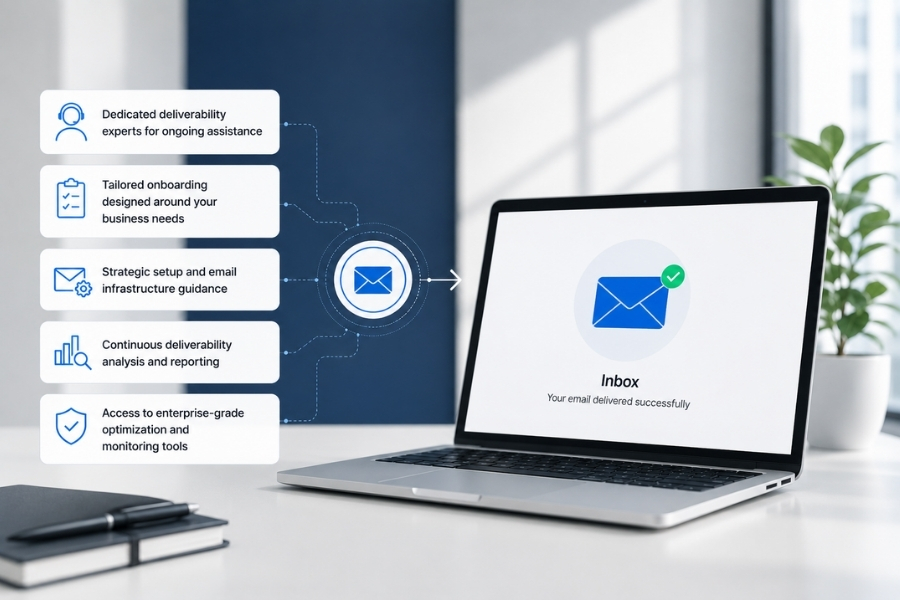
Scale your business with professional email deliverability management services. Reach more inboxes, improve campaign performance, and generate higher ROI from every email campaign.
Email delivery and email deliverability describe two different outcomes.
Delivery tells you whether the receiving mail server accepted your message. Deliverability asks what happened after that. Did the email reach the primary inbox? Did it land in spam? Was it filtered into another folder? Or did the receiving system reject it?
That difference matters because a campaign can show a high delivery rate while still reaching fewer inboxes than expected.
Gmail, Yahoo and Outlook evaluate several signals when deciding how to handle incoming mail. These can include your domain and IP reputation, SPF, DKIM and DMARC authentication, previous sending behaviour, recipient engagement, complaint rates, bounce patterns and the content of the message.
No single metric determines where an email lands. Inbox providers evaluate the overall sending pattern.
A domain that sends to valid, engaged subscribers and maintains proper authentication gives mailbox providers better signals. Frequent bounces, spam complaints, poor list quality or sudden changes in sending volume can create problems that take time to resolve.
Deliverability also needs regular monitoring because your email programme changes over time. Your database grows. Subscriber engagement shifts. You may change sending volume, campaigns or infrastructure. Each change can affect the signals mailbox providers use when evaluating your mail.
ASP OL Media monitors these areas and investigates changes in delivery and engagement data. We can review authentication records, sender reputation, bounce and complaint patterns, list quality and campaign performance to identify issues that may be affecting inbox placement.
The goal is straightforward: give your email programme a better chance of reaching the inbox consistently and provide you with clear information when something starts to go wrong.

Email providers use your reputation to see how people react to your emails. A good reputation is made up of high open rates, low spam complaints, and low bounces. Low engagement, high complaints, and sending to invalid addresses destroy it.
If your reputation gets too low, providers start automatically filtering out your emails. It doesn’t matter how good your content is. If your reputation is damaged, you will get reduced inbox placement.
SPF, DKIM and DMARC are authentication protocols that prove your emails are from you and not a spammer impersonating you. Your email provider will not trust your messages unless they are properly authenticated.
Many businesses implement authentication incorrectly or not at all. Then they complain about poor deliverability. We handle authentication the right way, so providers will trust your emails.
If people don’t open your emails consistently, then the providers take note. If people don’t open your messages or immediately delete them, that signals low value. Then, providers start putting your emails into tabs like Promotions or into spam.
Engagement is more important than almost anything else. We help you maintain high engagement through superior targeting, segmentation, and content strategy.
Sending to invalid emails, spam traps or unengaged subscribers harms deliverability. High bounce rates will tell providers your list is of poor quality, hitting spam traps and being blacklisted.
Regular list cleaning keeps these issues from ever happening and affecting your sender reputation. Your list is kept clean for deliverability purposes.
Some words, formatting patterns and structural elements trip spam filters. Too many exclamation marks, all caps, misleading subject lines and too many images compared to text are all red flags.
We review the email content before sending it out to see if we can find any triggers, and we adjust the formatting to avoid spam filters.
Incorrect DNS records, sharing an IP address with a bad reputation, and server configuration issues can all lead to bad deliverability. These technical problems generally go unnoticed until they cause severe damage.
We audit and monitor the technical setup to catch configuration issues before they affect inbox placement.
Your email campaign is right on target - tested subject line, refined design, clear call-to-action. You click send. Then most of your emails end up in spam folders or get blocked altogether.
Deliverability is the decisive factor that determines whether your emails reach the inbox or are filtered out before anyone sees them. You can write the best email in the world, but if it never lands in the inbox, it might as well not exist.
At ASP OL Media, we do technical and strategic work needed to keep your emails landing where they should. We provide everything you need for better email deliverability.
CAN-SPAM, GDPR and other regulations are not just legal requirements. They also affect deliverability. Non-compliant emails are flagged and damage your reputation with providers. We ensure all campaigns comply with the relevant rules — including obtaining valid consent, using clear unsubscribe messages and providing accurate header information. Everything is compliant.
We configure SPF, DKIM and DMARC records for your sending domains. These authentication protocols verify that your emails are legitimate and protect against attempts to spoof or phish your domain. Without proper authentication, you cannot achieve good deliverability. We set it up correctly from the beginning and monitor it to prevent the records from going bad.
We monitor your sender reputation with the major email providers. We track domain and IP reputation, engagement metrics, and spam complaint rate — all factors that affect how providers view your sending. If reputation scores start to slip, we identify the cause and fix it before any serious damage occurs. Proactive monitoring is the best way to avoid deliverability crises.
If you are switching from shared to dedicated IPs or using a new IP address, you’ll need to warm them up properly. Sending high volumes immediately from a new IP address triggers spam filters. We warm up IPS by gradually building a reputation. For businesses with dedicated IPs, we monitor IP reputation and sending patterns to maintain a positive score. For those on shared IPs, we ensure the pool is in good standing.
We test where emails are likely to land before big campaigns launch — in Gmail inboxes, Yahoo spam folders, and Outlook promotions. Knowing the placement ahead of time lets you fix problems before you send to your full list. We run placement tests across major providers and devices. If a campaign is landing in spam folders, we identify what’s wrong and fix it.
We regularly clean your email list of invalid addresses, hard bounces and chronic non-openers. A clean list improves deliverability by boosting engagement and lowering bounce rates. List cleaning also removes spam traps and honeypots that could get you blacklisted. We identify these threats and eliminate them before they can do any harm.
Blacklisting kills your deliverability overnight. We monitor major blacklists so we can detect listings quickly. If you’re blacklisted, we handle the removal process and address the root cause of the listing. To get off the blacklist, you need to know why you were put on it and show that you have fixed the problem. We work with the operators of the blacklists to ensure that the delisting is done as fast as possible.
High engagement shows providers that recipients like your emails. We help you increase engagement with better segmentation, send-time optimisation and re-engagement campaigns for inactive subscribers. Removing unengaged subscribers may reduce your list, but it increases deliverability for everyone else. Email lists are all about quality over quantity.
You receive regular reports with deliverability metrics — inbox placement rates, bounce rates, spam complaint rates, and sender reputation scores. The data is clear on whether or not deliverability is improving or declining. We also offer analysis explaining what the numbers mean and what actions to take based on the data.
We set up a separate dedicated sending domain from your main business domain. This separates your transactional email and other business communications from your marketing email reputation. Using a subdomain for bulk sending secures your main domain’s reputation if something goes wrong with your marketing campaigns.
SPF, DKIM, DMARC, and other DNS records need to be set up and maintained correctly. We maintain these records and confirm they remain accurate as your email infrastructure grows. Incorrect DNS records can bring email to a standstill. We solve that by doing the configuration right.
Major ISPs send feedback loops, which tell you when recipients mark your emails as spam. We build feedback loops and monitor for complaints so you can identify and fix issues that cause spam reports. Understanding why people flag emails as spam allows for better content and targeting to reduce future complaints.
We implement proper bounce handling so that hard bounces are removed from your list automatically and soft bounces are tracked for future action. This prevents repeated sends to bad addresses. Automated bounce management keeps your list clean, without manual work.
Most businesses have predictable deliverability issues; we correct them.
A sudden drop in inbox placement is usually a sign that your reputation has suffered, you’ve been blacklisted, or your authentication is failing. We find out what’s causing it and fix it.
High bounce rates point to something being wrong with the quality of your list or your database. We clean lists and find invalid address sources.
Low engagement rates mean work is needed on either content or targeting. We analyse who is not engaging and why, and we adapt our strategy accordingly.
If the content is flagged by filters or the sender’s reputation is low, it ends up in the spam folder. We improve reputation and optimise email content to get back into inboxes.
If you are on a blacklist, you will need to request removal and fix the problems that led to the listing. We handle the removal process and the root cause.
To maintain good deliverability, we follow the proven best practices.
Where it is appropriate, we use double opt-in for new subscribers. We check email addresses for validity and ensure recipients want to receive emails. This approach reduces spam complaints and invalid sign-ups.
We send regularly without long gaps because sporadic sending may confuse email providers, and uneven activity can damage the sender’s reputation. Regular sending keeps positive trust signals.
We segment audiences so emails are sent to people most likely to engage. Relevant emails generate better engagement, and higher engagement rates increase deliverability. Plus, campaigns are more effective when targeted.
We make it easy to find unsubscribe options. Hidden unsubscribe links result in more spam complaints, and spam complaints hurt reputation more than unsubscribes.
We do not buy or rent email lists because these lists often include spam traps, invalid addresses that contribute to bounce rates, and recipients who never consented to hear from you. The use of these lists can have a severe negative impact on deliverability.
We track engagement and remove persistently unengaged subscribers. If someone has not opened an email in six months, they are hurting your numbers. Removing them increases overall deliverability.
We test emails before sending to full lists. This approach helps us detect issues pre-launch, mitigate major deliverability issues, and ensure campaign performance as intended.
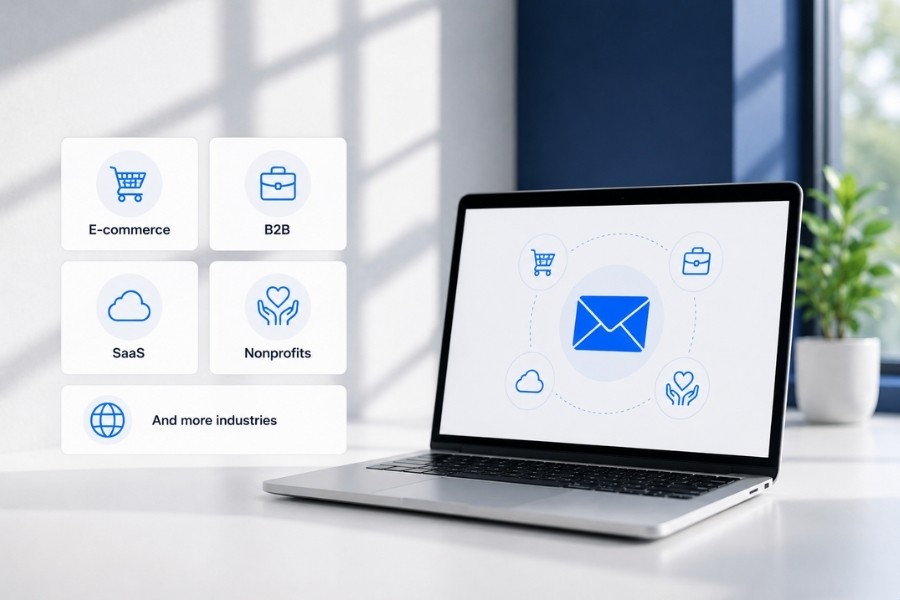
We handle deliverability for businesses in various industries.
We also have experience in retail, healthcare, real estate, technology, education, hospitality and more. Every industry has its own deliverability problems, and we solve them.