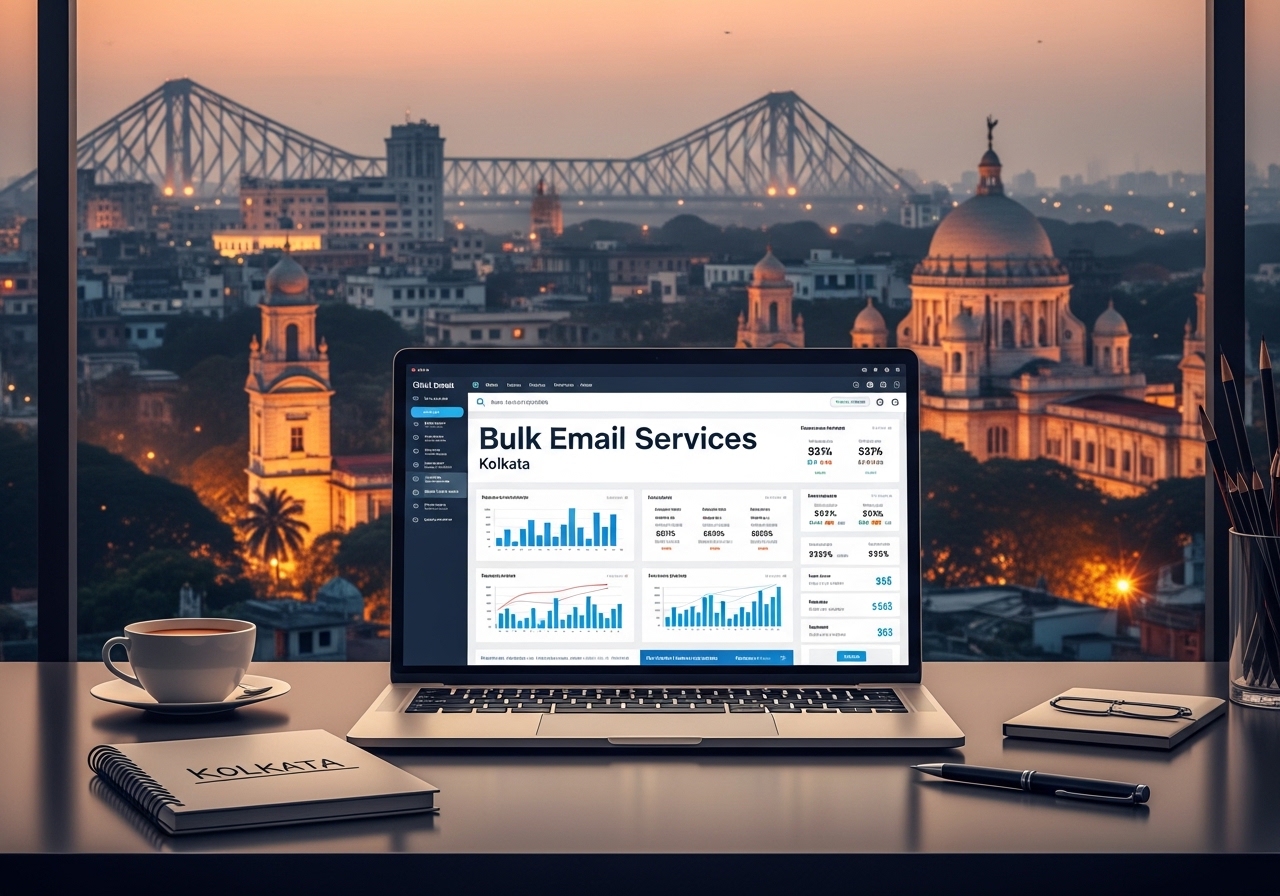
ASP OL Media helps businesses in Kolkata manage email communication for large contact lists. Use bulk email for newsletters, customer updates, announcements, offers and other messages that need to reach a defined audience without sending them one by one.
Having a large email list does not automatically make it useful. The list needs to be organised, the sending domain needs to be configured properly, and the campaigns need to reach people who are likely to find them relevant.
ASP OL Media works with businesses across Kolkata on these parts of bulk email marketing. An online retailer may need promotional emails and abandoned cart reminders, while an IT company may rely more on newsletters, product updates and automated follow-ups. Healthcare providers, coaching institutes and other local businesses have their own requirements.
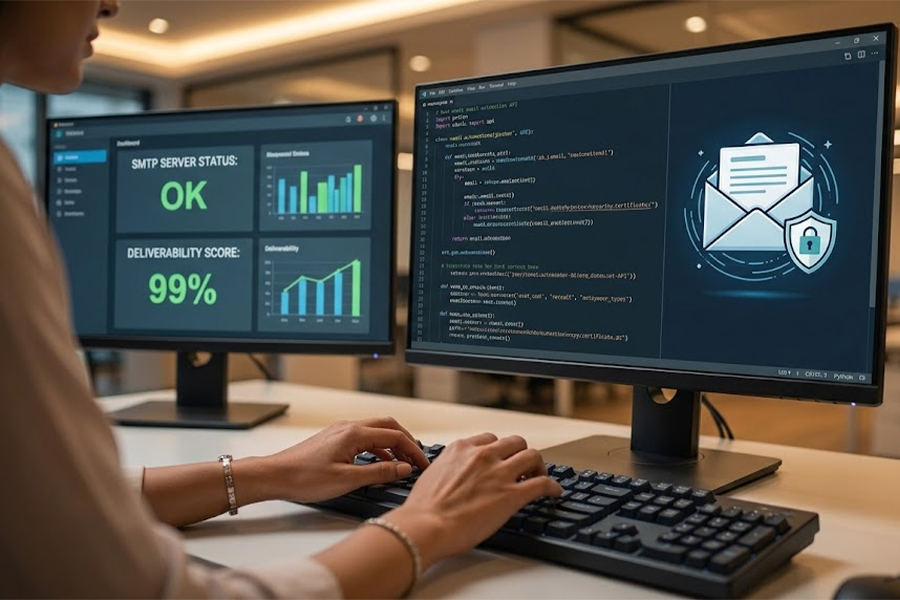
The technical setup can include SMTP infrastructure, SPF, DKIM and DMARC authentication, dedicated IPs where appropriate, contact list management and campaign tracking. These measures support the sending process and can help reduce common deliverability problems.
There is an important distinction between delivery and deliverability. Delivery refers to an email being accepted by the recipient's mail server. Deliverability covers the wider factors that affect whether legitimate messages are successfully delivered and where they are placed. Inbox placement can also vary between Gmail, Outlook, Yahoo and other mail providers. No sending provider can control those final filtering decisions.
The type of email you send should depend on the reason for contacting the recipient. Promotional campaigns, transactional messages, newsletters and automated sequences each have different uses.
Promotional emails are suitable for product launches, discounts, seasonal offers and other sales activity. A Kolkata retailer could send a Puja offer to customers who have previously purchased from the store, while a restaurant in Park Street might announce a new menu or limited-time promotion.
Transactional emails follow a specific customer or account action. OTPs, account verification messages, order confirmations, invoices, payment receipts, password resets and delivery updates are common examples. These messages are different from promotional campaigns because the recipient expects the information as part of a transaction or account activity.
Newsletters are suited to regular information that does not depend on a single purchase or promotion. A real estate company could share new listings and market updates, while an IT business might send product news or useful industry information. There is no fixed frequency that works for every business. Weekly, fortnightly or monthly communication may all be appropriate depending on the amount of useful content available.
A drip campaign is a sequence of emails sent over a period according to predefined rules. Someone who signs up for a service might receive a welcome email first, followed by information about the product and a later follow-up. The sequence can also respond to what the recipient does. For example, someone who clicks through to a product page could receive a different follow-up from someone who does not interact with the earlier message.
A short email survey can collect feedback after a purchase, service interaction or event. The message can link to a form and explain how long it is expected to take. Businesses can use the responses to identify recurring complaints, understand customer preferences or review a particular product or service.
Email can be used before and after an event. An organiser might send an invitation, a registration reminder and a follow-up message after the event. For a workshop or college event in Jadavpur, the campaign could include the registration link, venue details and scheduled reminders.
Email is still useful when a business has an existing database of customers, subscribers or prospects. A campaign can be prepared once and sent to the selected audience without paying for a separate advertising placement for every person reached.
A business does not need the advertising budget of a large company to use email. Once a permission-based contact list is in place, the same email system can support a small newsletter or a much larger campaign.
The cost depends on factors such as sending volume, list size and the features included in the email service. Businesses can also measure campaign activity through metrics such as deliveries, opens, clicks, bounces and unsubscribes.
A single contact list can contain customers with very different interests. A retailer may have first-time buyers, repeat customers and subscribers who have never purchased. Sending the same offer to all three groups may not make sense.
Segmentation lets businesses separate contacts using information such as location, interests, customer type, purchase history or previous interactions. The campaign can then be adjusted for each group.
Kolkata businesses often have campaigns tied to Durga Puja, Kali Puja, New Year and seasonal sales. Email can be scheduled around these dates so that promotions, announcements and reminders are prepared before the busy period begins.
A retailer, for instance, might send an early announcement to existing customers, followed by a reminder closer to the sale date. The messages do not need to be identical for every subscriber.
Email also has a role after the first purchase or enquiry. Businesses can use newsletters, product updates, service information and occasional offers to stay in touch with people who have already interacted with them.
The frequency matters. Sending useful information at a reasonable pace is more sustainable than repeatedly sending the same promotion.
Some emails do not need someone to send them manually each time. A new subscriber can receive a welcome message after signing up. An online store can send an abandoned cart reminder. A business can also schedule follow-ups after an enquiry or registration.
Once the conditions and timing have been configured, the system handles those messages automatically.
Email requirements vary considerably between industries. The content, frequency and type of automation needed by an e-commerce company will be different from those of a clinic or coaching institute.
Retailers can use email for product announcements, festive offers, abandoned cart reminders and other customer communication. Purchase history can also be used to separate customers into relevant groups.
Clinics, hospitals and diagnostic centres may use email for appointment reminders, reports, health information and other routine communication where email is suitable.
Property businesses can send project announcements, new listings, site visit information and follow-ups to prospective buyers. An agency operating in Rajarhat, for example, could maintain separate groups based on property type or buyer interest.
IT and SaaS businesses often need a mixture of marketing and automated customer emails. Typical examples include welcome messages, onboarding sequences, product announcements, software updates and webinar invitations.
Coaching institutes and training centres can use email for admission information, new batch announcements, course updates, exam information and other student communication. Institutes serving areas such as Jadavpur and Salt Lake can organise lists according to courses or batches.
Event companies need to communicate dates, registration details, invitations, reminders and venue information. Bulk email can handle these messages from the initial invitation through to post-event follow-up.
A campaign should be reviewed before a large send begins. Technical configuration, contact list quality and the email itself can all affect the outcome.
SPF, DKIM and DMARC help recipient mail systems verify information about the sending domain. We configure these records as part of the email sending setup where required.
Authentication supports email deliverability, but it does not guarantee inbox placement. Receiving providers also consider factors such as sender reputation, list quality, message content and recipient behaviour.
A new dedicated IP should not normally be used for a large sending volume from the first day. The volume can be increased gradually so that the sending pattern has time to establish a reputation with receiving systems.
The right warm-up schedule depends on the expected volume and the existing sending history.
Spam complaints can affect sender reputation. Where feedback loop data is available, complaint information can be used to identify recipients who have marked messages as spam.
Those addresses can then be suppressed from future promotional sends.
The wording, links and HTML structure of an email can contribute to filtering problems. We review campaigns for obvious issues such as suspicious links, problematic formatting and content patterns that may raise filtering concerns.
No content checker can predict exactly how every recipient provider will classify a message.
Sending domains and IP addresses can be checked against relevant blocklists. If a listing is found, the cause should be investigated before further action is taken.
Being absent from a blocklist does not guarantee inbox placement. It is one of several reputation checks used when reviewing a sending setup.
Promotional email should be sent to contacts who have given appropriate permission to receive it, with a clear way to unsubscribe. Lists should also be maintained so that invalid addresses and opted-out recipients are not repeatedly included in campaigns.
Good list hygiene reduces unnecessary bounces and complaints and gives businesses a cleaner database to work with.
The setup depends on what you are sending, how often you send it and the size and condition of your contact list. Our work generally covers the following stages.
We start by discussing the purpose of the emails, the intended audience and your existing setup. If you already send bulk email, we can review areas such as domain configuration, list quality and campaign performance to identify possible problems.
We configure the sending infrastructure according to the campaign requirements. This can include SMTP settings, domain authentication and a dedicated IP where the sending volume and setup justify one.
Your contacts can be grouped according to information available in the database. Location, customer type, interests and previous purchases are some of the factors that can be used.
The purpose of segmentation is straightforward: send each group the communication that applies to them.
Once the campaign is ready, the emails are sent through the configured infrastructure. We monitor sending activity, delivery status, bounces and other available indicators.
Deliverability is assessed separately because an email being accepted by a recipient server does not necessarily mean it has reached the primary inbox. If a campaign shows signs of a deliverability problem, the sending setup, list or content can be reviewed.
After the send, the available campaign data can be reviewed to see how recipients responded. This may include delivery figures, opens, clicks, bounces and unsubscribes.
The results can then inform changes to future campaigns, such as adjusting the audience, subject line, content or sending frequency.
If you have a growing contact list and need a better way to manage newsletters, promotions, customer notifications or automated emails, ASP OL Media can help with the technical setup and campaign management.
Share your monthly email volume, contact list size and the type of emails you send. We can review your requirements, explain the suitable setup and provide a quote based on your actual needs.
Contact ASP OL Media to discuss your Kolkata bulk email requirements or schedule a demo.