Reach Millions Instantly with Bulk Email Marketing
Expand your presence in India’s biggest metro markets. ASP OL Media provides the infrastructure and dedicated IP reputation needed to ensure your high-volume campaigns land directly in the inbox.
Email Marketing CampaignsBulk Email ServicesSMTP Server with IP RotationEmail AutomationEmail Deliverability ManagementAnalytics and ReportingEmail List Management and GrowthEmail Design and Content Creation
Send Bulk Emails Without the Risk
Sending bulk emails isn’t just clicking “send” to a massive list. We look after the technical infrastructure to protect your sender reputation and maximise your deliverability.
1
Dedicated Infrastructure
We offer SMTP servers and IP rotation management for high-volume senders. Keep your sending strong, scalable, and fully insulated from shared-pool risk.
2
Guaranteed Deliverability
We have strict SPF, DKIM, and DMARC authentication and ongoing list hygiene to make sure your bulk messages land in the inbox, not the spam folder.
3
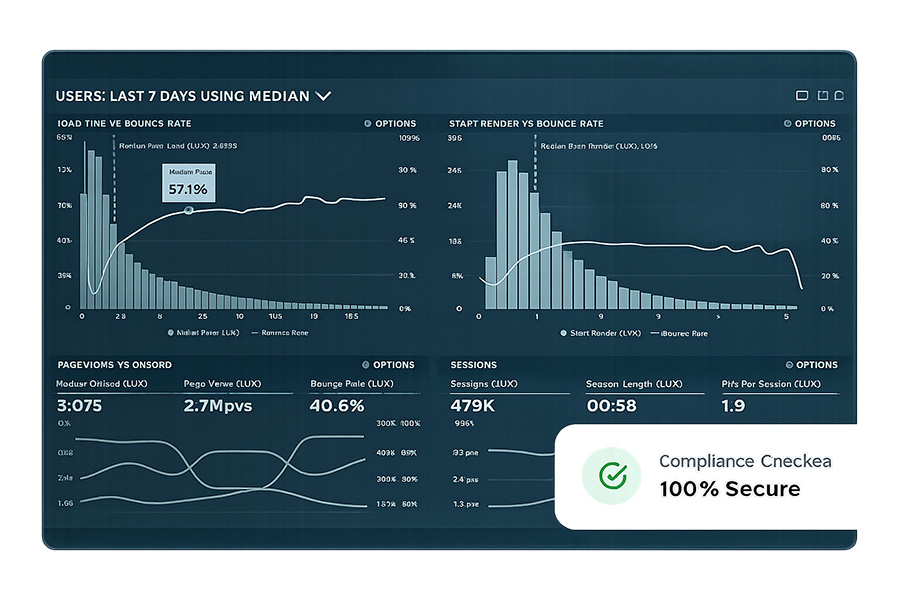
Real-Time Analytics
Monitor millions of sends in real time. Measure the real ROI of your mass campaigns with transparent reporting on opens, clicks, bounces, and complaints.
Our Locations
We provide targeted, high-efficiency bulk email marketing solutions customised to the specific demographics and business environments of India’s leading cities. Choose your city for more.
Whether you are sending a hundred thousand emails or ten million, our bulk marketing infrastructure guarantees rapid execution without compromising your domain reputation.
High-Speed SMTP Servers
We provide lightning-fast, secure SMTP relay servers designed specifically to handle large-volume traffic seamlessly.
Smart IP Rotation
We spread your email traffic across multiple high-reputation IP addresses, ensuring no single IP gets overloaded or flagged by ISPs.
Regulatory Compliance
We strictly enforce adherence to CAN-SPAM, GDPR, and other local regulations to protect your brand from legal and reputational risks.
Bulk Email Marketing in Today’s Digital World
Bulk email marketing sits in a specific niche within the wider email marketing ecosystem. It’s not just email marketing with a larger volume. Once you cross certain thresholds, the infrastructure demands, deliverability issues, and strategic considerations change dramatically. A campaign to 5,000 subscribers and a campaign to 5 million subscribers may both be “email marketing” in a technical sense, but they operate in different contexts.
Most companies discover bulk email marketing when they’ve outgrown the limits of their typical ESP (Email Service Provider) or the pre-send cost becomes prohibitively expensive at scale.
An e-commerce brand that sends out daily promotional blasts to a million-user database. A media publisher sending breaking news alerts to local audiences. Monthly newsletter sent to a prospect list of international companies (a B2B company). These situations are outside the normal and predictable features of a standard marketing automation platform.
The technical challenges increase with scale. Shared IP pools that can easily handle 50,000 sends can buckle under 500,000. Sender reputation is stable at moderate volume, but volatility creeps in when you’re pushing hundreds of thousands of emails in a short window.
ISPs treat high-volume senders differently. Gmail, Outlook, and Yahoo—they all have internal thresholds and filters that treat bulk senders with extra suspicion. Even if your email passes all the technical authentication tests, it could still end up in spam just because of the pattern of volume-triggered alarms.
Why Traditional Email Platforms Struggle with High Volume
Most standard email marketing platforms are built for campaigns, not for bulk operations. They are optimised for segmentation, personalisation, A/B testing, and funnel tracking. Those are good features, but they are not built for the real world of mass sending. You don’t need fancy customer journey mapping when you’re sending a million emails. You need raw throughput, guaranteed delivery windows, and infrastructure that won’t choke or throttle your send.
Platform costs are at least linear. Many ESPs charge per subscriber or per email, which can make your monthly bill balloon to absurd levels once your list exceeds six figures. A business that sends 10 million emails a month could receive invoices totalling the revenue generated by those campaigns. Eventually, the economics just don’t add up. Either you find a cheaper solution, or you abandon your email strategy and lose potential revenue.
Then there’s the shared infrastructure question. If you’re on a shared IP pool, your deliverability is affected by what other senders on that pool do. Your inbox placement can be impacted by someone else’s spam complaints or bad list hygiene. This common risk is not acceptable for high-volume senders. You need dedicated IPs, controlled warm-up programmes, and the ability to separate your sender reputation from the noise of everyone else.
The Infrastructure for Successful Bulk Campaigns
Dedicated SMTP
Trustworthy bulk email marketing is built on dedicated SMTP infrastructure. SMTP (Simple Mail Transfer Protocol) is the protocol that actually sends your emails to recipient mail servers.
For small volume sending, you can rely on third-party services or your own domain mail server. When operating at bulk scale, it is essential to have purpose-built SMTP relays that can manage sustained traffic without encountering bottlenecks.
Warming Up an IP
IP reputation management quickly becomes an operational concern. The leading ISPs assign each IP address a reputation score based on prior sending behaviour, complaint rates, bounce rates, and engagement metrics. A fresh IP has no reputation. Thus, ISPs will delay or throttle your emails until you build up credibility.
Warming up an IP (gradually increasing the number of sends over weeks) is a typical procedure, but it must be properly planned and supervised.
IP Rotation
IP rotation tactics help mitigate risk and boost deliverability for large campaigns. You don’t want to blast one IP with millions of emails; you want to distribute them across numerous IPs with their own established reputations. This way, no single IP gets flagged for weird volume surges, and there’s redundancy in case one IP experiences brief deliverability issues.
SPF, DKIM, and DMARC
SPF, DKIM, and DMARC are must-have authentication protocols at a bulk scale. These technical criteria help verify that your emails are truly from your domain and have not been altered in transit. ISPs employ these signals as a first-pass filter. Fail authentication, and your emails are dead on arrival.
Pass authentication, and you’ve cleared the first hurdle. But you still need solid engagement metrics and clean list practices to ensure high deliverability over time.
List Size Doesn’t Matter; List Quality Does
One of the biggest myths in bulk email marketing is that more addresses means better results. But the truth is, list quality always beats list size. A clean, engaged list of 100,000 will outperform a bloated, stale list of 1 million. Why? Because ISPs monitor engagement. They can see who opened your emails, clicked on them, deleted them immediately, and marked them as spam. Those signals go into their filtering algorithms.
High bounce rates can quickly kill the sender's reputation. If you send to invalid addresses (emails that are no longer valid or never existed), mail servers will count those as hard bounces. Too many bounces can lead ISPs to become suspicious of your future emails. List hygiene—regularly scrubbing your database to remove dead addresses—is not optional for bulk senders; it is a matter of survival.
Spam traps are another landmine. These are email addresses whose only purpose is to lure spammers. These are often old, recycled addresses that ISPs repurpose as traps or honeypot addresses planted on the web to be scraped by sketchy list-building services. You damage your sender's reputation immediately when you send to a spam trap. Your only defence is ethical list-building and frequent validation of your lists to identify and remove suspicious addresses before you send.
Segmentation based on engagement works even in bulk situations. Yes, you are sending to huge lists, but that does not mean you will send the same content to every subscriber. Segmenting active users from dormant users allows you to customise the frequency and content approach. Re-engagement campaigns can help win back cold subscribers. Sunsetting (removing) persistently non-engaged users protects your metrics and keeps ISPs happy.
Compliance in Bulk Email Marketing
Commercial email is governed by regulatory frameworks such as CAN-SPAM (United States), GDPR (European Union), and various regional regulations, setting baseline standards. These are not just legal boxes to tick; they are operational best practices. If you implement these rules, you can improve deliverability and reduce complaints.
CAN-SPAM
You need to clearly mark your emails as advertisements (when applicable). You need to include a valid physical address in every email. Also, you need to offer a working unsubscribe mechanism that processes opt-outs within 10 days. The rules are simple but frequently broken, often inadvertently. Bulk senders need automated systems to process unsubscribes in real time, not manual processes that lag.
GDPR
GDPR is stricter than most other regional laws. For this reason, it is often the default standard for bulk senders who operate internationally. It requires explicit consent for email marketing to EU residents; pre-checked boxes and implied consent are not sufficient. You need affirmative opt-ins, clear privacy policies, and the ability to remove user data upon request.
ISPs Own Rules
In addition to CAN-SPAM and GDPR, ISPs have their own rules and best practices. For example, some technical requirements and engagement thresholds are included in Gmail’s Bulk Senders Guidelines. If you ignore these rules, your emails will be deprioritised or blocked entirely, even if they are technically legal under CAN-SPAM or GDPR. Leading ISPs have significant power in the email ecosystem, and bulk senders must follow their rules to keep access to inboxes.
Real-Time Monitoring and Campaign Optimisation
Real-time analytics are shifting from nice-to-have to mission-critical at scale. Problems can escalate quickly when you are sending millions of emails. A technical misconfiguration, a sudden spike in complaints, and a temporary ISP block are problems that often occur in bulk sending and can kill an entire campaign if not identified immediately.
If you monitor open rates, click rates, bounce rates, and complaint rates in real time, you can spot anomalies fast. For example, if open rates suddenly drop, it can be a sign of a deliverability issue. A spike in complaints means your content or targeting is off. Bounce rates are rising unexpectedly—your list hygiene process may have failed. Or you may have imported bad data by mistake.
Throttling and send-time optimisation are two of the most powerful levers. Some ISPs may prefer to receive emails in a steady trickle rather than a sudden flood. Sending 2 million emails in 10 minutes can hit rate limits or spam filters. By spreading out the volume over a few hours and throttling intelligently based on the recipient domain, you can improve acceptance rates and reduce the risk of being flagged.
Feedback loops with major ISPs give direct insight into complaint behaviour. They give you the signal when a recipient marks your email as spam, so you can automatically unsubscribe that address from future sends. This is critical for maintaining low complaint rates and a good sender reputation.
When Bulk Email Marketing Makes Strategic Sense
Bulk email marketing may not be for every business. A traditional marketing automation platform with moderate volume caps will just do fine for many companies. Bulk email marketing is a sensible choice when you need to focus on volume, cost-efficiency, or infrastructure control.
E-Commerce Retailers
E-commerce retailers with large customer databases tend to hit the volume ceiling fast. Because daily promotional emails, cart abandonment sequences, and transactional notifications add up quickly. If you are sending millions of emails a month, the per-send costs with traditional ESPs will be untenable. You actually need dedicated bulk infrastructure as an economically rational choice.
Publishers and Media Companies
These businesses use bulk email to send newsletters, breaking news alerts, and content syndication. Speed is everything here. For example, if you send a breaking news alert 10 minutes late, you will lose most of its value. High-performance SMTP bulk email infrastructure ensures fast delivery across massive subscriber bases.
B2B Businesses
B2B companies with large lead databases face additional constraints because their lists are smaller than those of B2C retailers. But they still need dedicated IPs and sender-reputation management. When you are emailing hundreds of thousands of business contacts, reputation is everything. A spam complaint or deliverability problem can affect your entire sales pipeline.
Affiliate Marketers or Lead-Gen Experts
For professionals, email deliverability is a very important thing. They build their business models on efficiently reaching large audiences. Bulk email marketing infrastructure, with its emphasis on throughput and inbox placement, is a perfect fit for what they do.
Email is a primary revenue channel, not a secondary tactic, is the common thread in these use cases. When email delivers real business results and is sent at volume, the investment in dedicated bulk infrastructure is self-justifying for better deliverability, lower per-send costs, and greater operational control.
Start Today
Ready to Supercharge Your Email Marketing?
Join 10,000+ Indian businesses using ASP OL Media to reach more customers, drive more sales, and grow faster.
14-day free trial . No credit card . Cancel anytime