Email Marketing Campaigns

Email A/B Testing That Drives Measurable Results

Test your way to better email performance. We build and run A/B tests that reveal what resonates with your audience. Better subject lines, calls to action, and send times lead to higher engagement and more conversions.
Email A/B Testing That Drives Measurable Results
Email Marketing Campaigns Bulk Email Services SMTP Server with IP Rotation Email Automation Email Deliverability Management Analytics and Reporting Email List Management and Growth Email Design and Content Creation
What is email ab testing

What Email A/B Testing Is

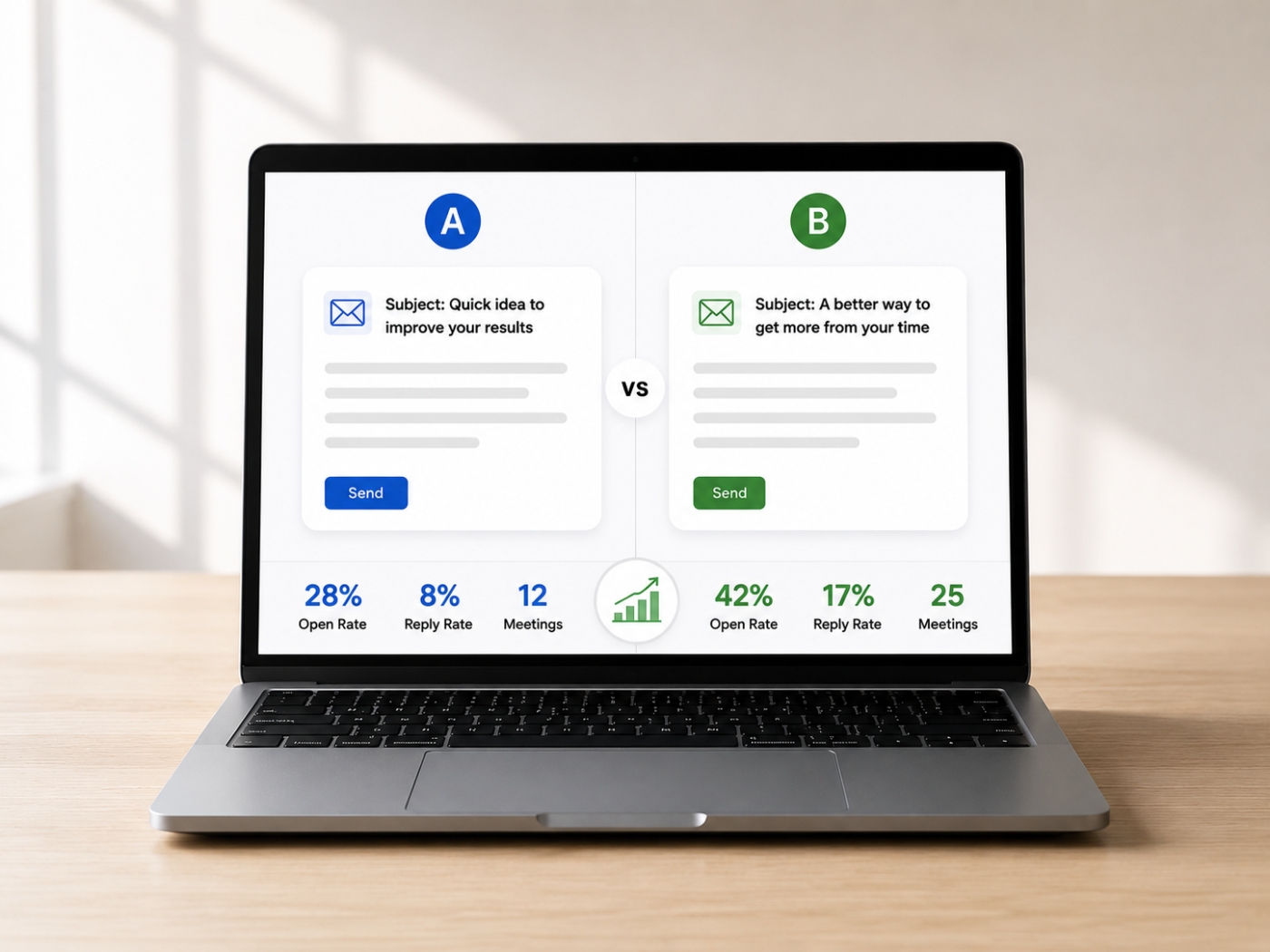
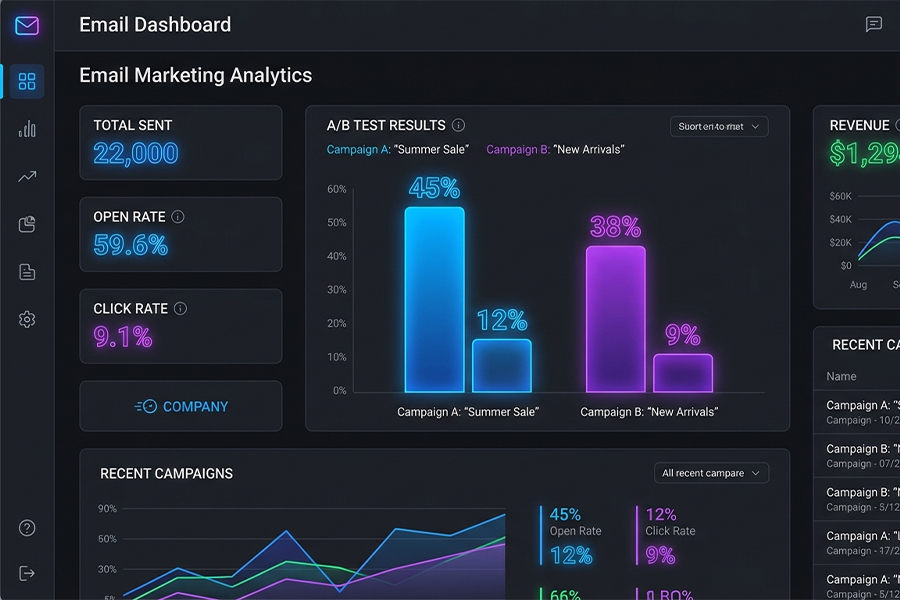
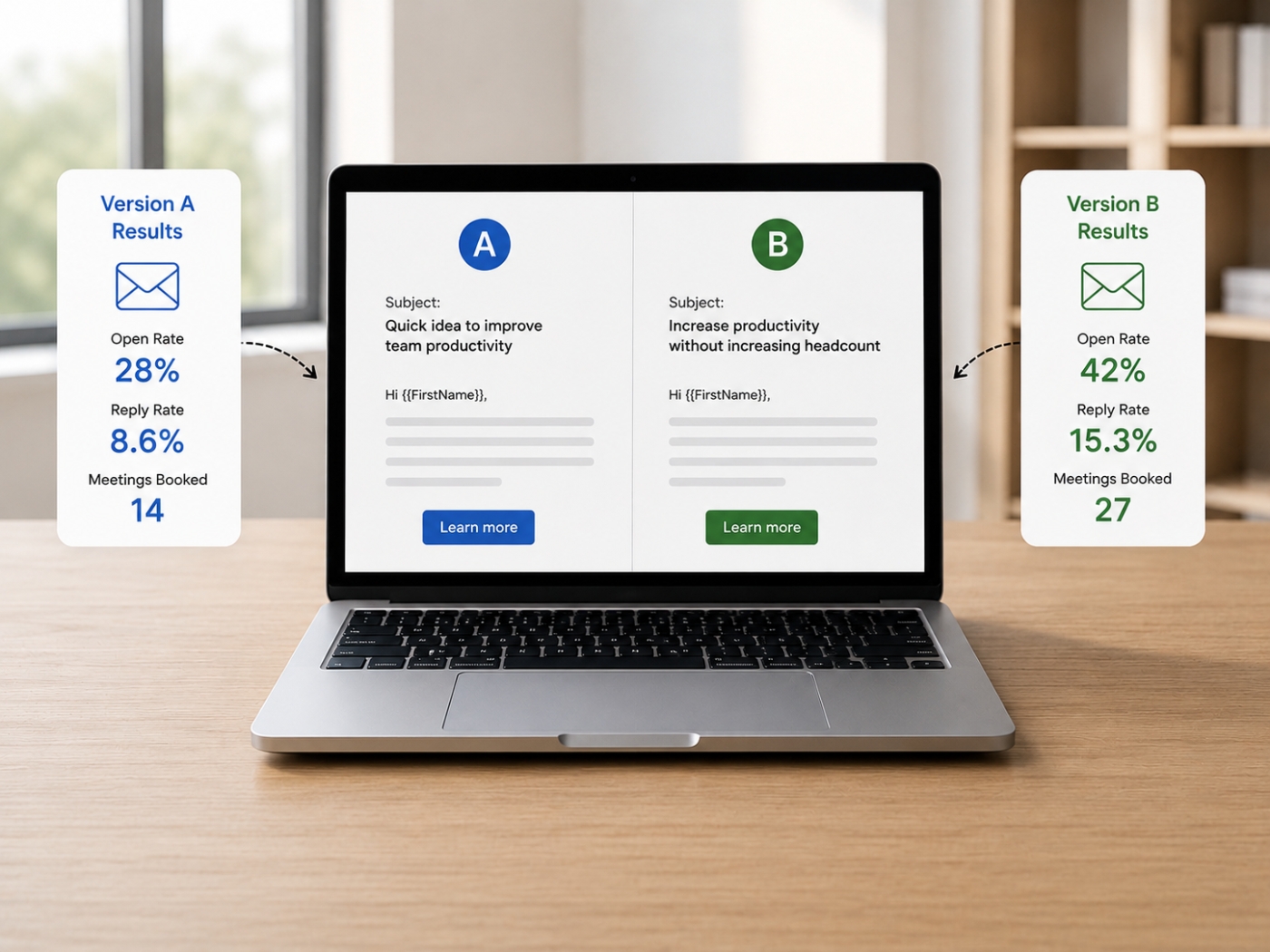
A/B testing in email marketing is when you create two versions of an email that differ in one specific element. Version A is coming to a part of your list. Version B moves to another section. Then you measure which version performs better on a predetermined metric, such as open rate, click rate, or conversion rate.

The winning version is either sent out to the rest of your list or informs your approach to future campaigns. Over time, regular testing builds up a knowledge base of what works for your specific audience.

The tactic is to change one element at a time. If you change the subject line, call to action, and images all at once, you can’t tell which change is driving the difference in performance. Isolated testing gives you a clear cause-and-effect relationship.

Why A/B Testing Matters

Why A/B Testing Matters

Most email marketing decisions are made based on best practices, industry benchmarks, or personal preferences. These sources provide starting points, but they don’t consider your unique audience and business context.

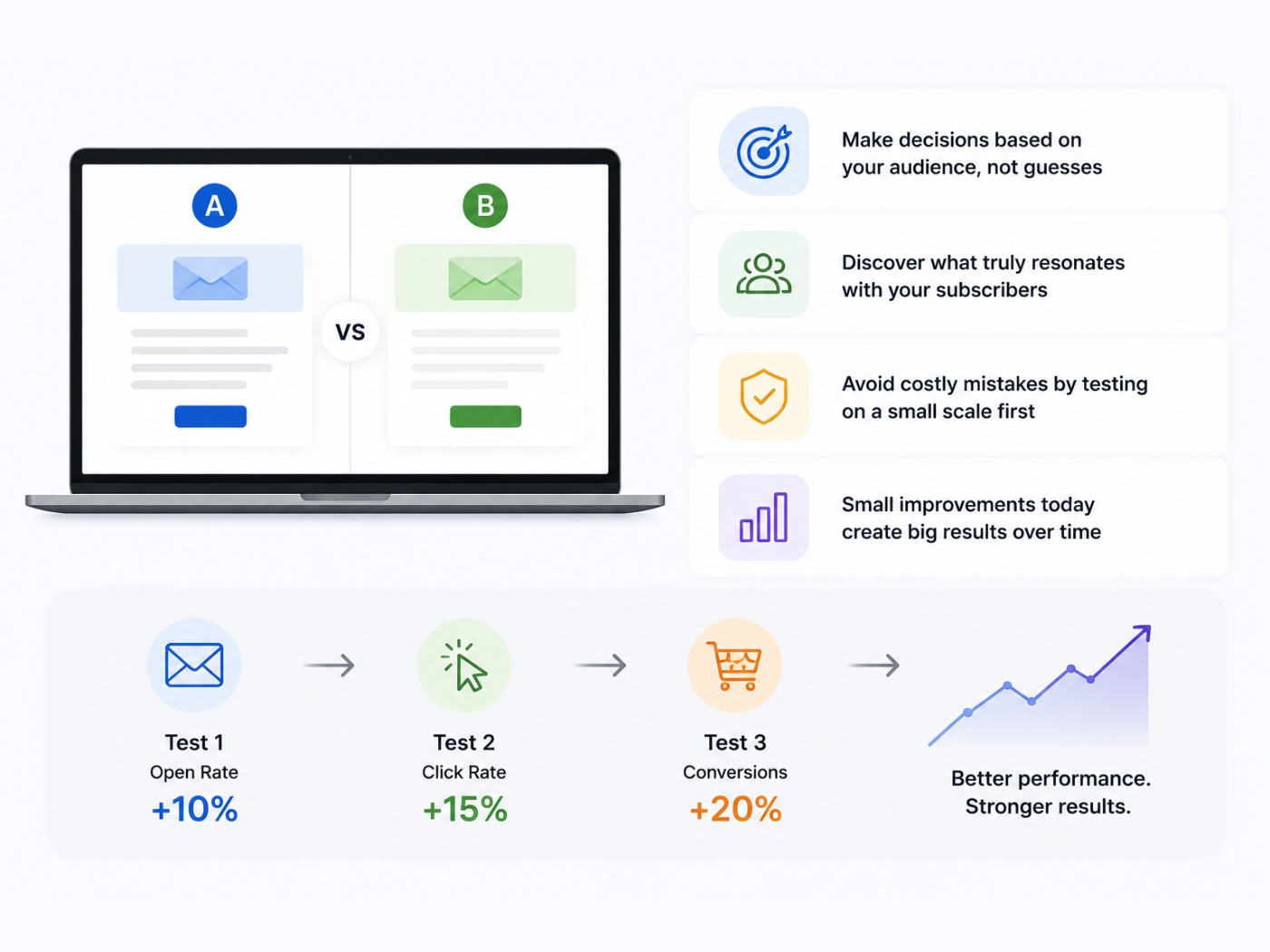
What works for one company may not work for another. Your subscribers have likes and dislikes, behaviors, and response patterns. That’s where A/B testing reveals those patterns so that you can make decisions based on your real audience, not general assumptions.

Testing also helps to avoid costly mistakes. Sending a poorly performing email to your entire list is a wasted opportunity. Starting a small test early helps fix problems before they affect everyone.

The cumulative effect of time on testing compounds is being studied. One test boosts open rates by 10%. Another test increases click rates by 15%. A third test boosts conversions by 20%. These improvements are incremental, resulting in a much better overall performance.

Elements We Test in Email A/B Testing

We can test almost any part of an email. We keep focus on things that usually make the most significant difference to performance.

Subject Lines

Whether emails get opened depends on the subject lines. We try different things to see what works best for your audience. For example, long vs. short, questions vs. comments, benefit-focused vs. curiosity-driven, personalized vs. generic, and emoji vs. text-only.

Subject line tests are usually the most obvious winners because open rate differences are easy to measure. Even a 5% increase in opens from a subject line can significantly improve campaign results.

Preview Text

Most email clients show some preview text next to the subject line. This is often ignored, but it influences open decisions. We test different preview text approaches to see what complements subject lines best and drives additional opens.

From Name

The sender’s name affects trust and recognition. We try variations like company name vs. personal name, full name vs. first name only, or adding job titles. Different audiences respond better to personal senders, while others prefer company branding.

Email Content & Copy

Your email body can be tested for tone, length, structure, and messaging. Short form vs. long form. Formal vs. informal. Feature-oriented vs. benefit-oriented. Simple vs. story-driven. These tests reveal how your audience receives information.

Call to Action

Your call to action drives conversions. We test button text, button color, button size, and button position. Action-oriented language, such as “Get Started Now”, may work better than generic language, such as “Click Here”. Maybe red buttons convert better than blue buttons. Testing shows what makes your audience click.

Images & Design

Visual elements impact engagement. We test emails with images vs. plain text, different hero images, and product photos vs. lifestyle photos. We also test whether there are graphics and icons. Some audiences respond better to visual emails, while others prefer plain text.

Layout and Structure

Email format affects readability and conversion. We test single-column versus multiple-column layouts, the order and hierarchy of content, the placement of key information, and whether key details are above or below the fold.

Send Time and Day

Who views your emails depends on when you send them. We test at different times of day and days of the week: morning vs. afternoon vs. evening, weekdays vs. weekends, and business hours vs. off-hours. Timing varies greatly depending on the audience and industry.

Personalization Level

Personalization can improve relevance but can also be intrusive if overdone. We test out different levels of personalization, from simply using your first name to dynamic content driven by behavior and preferences. This shows where personalization is useful and where it is uncomfortable.

Special Offers & Incentives

If you send out offers via email, it is good to experiment with different types and see what motivates people to buy. We test free shipping vs. percentage discount vs. dollar amount discount, limited-time offers vs. ongoing promotions, and exclusive access vs. public sales.

Our A/B Testing Process

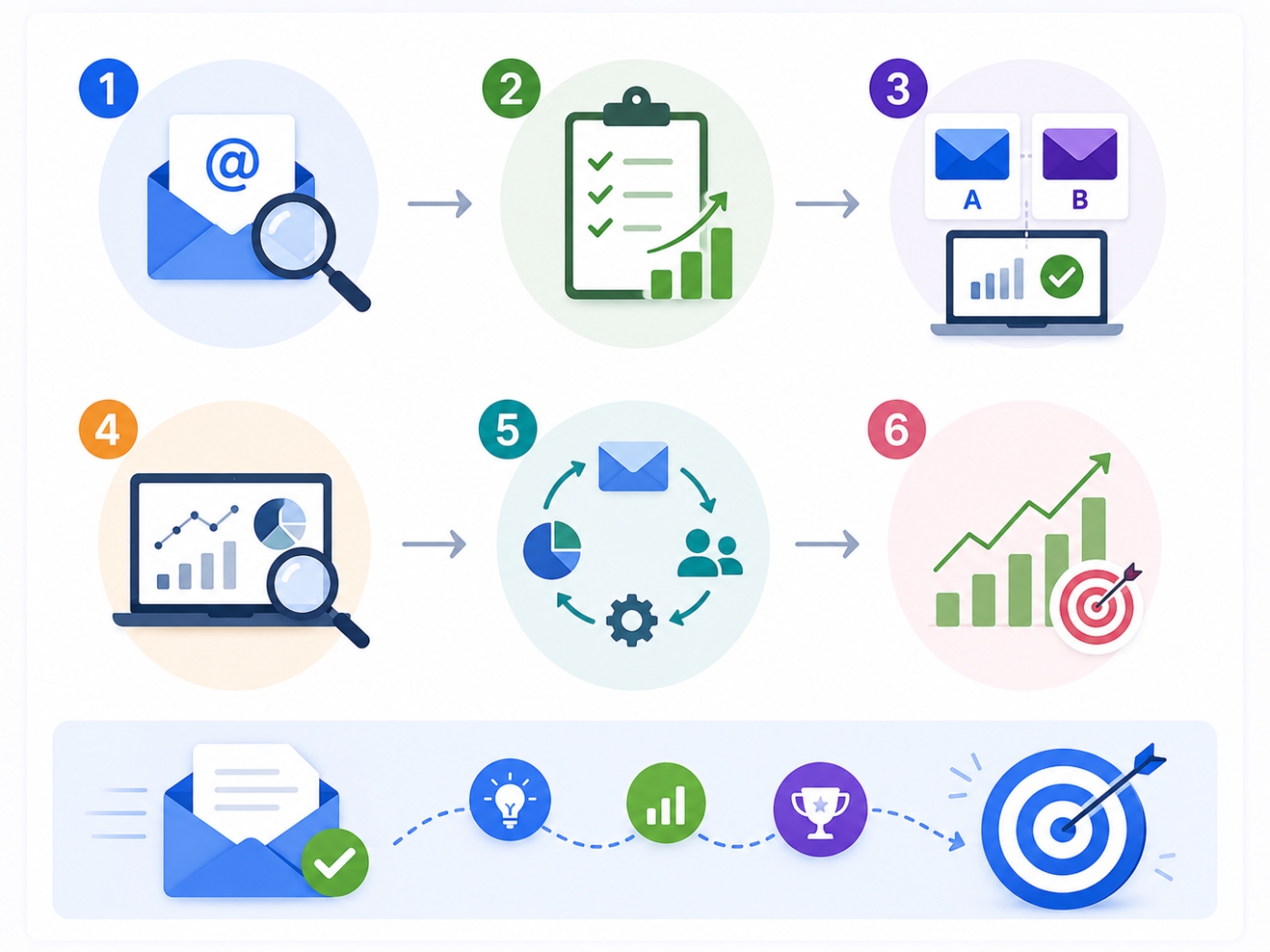
Our process is designed to ensure the tests we conduct provide valid, actionable results.

Identifying Testing Goals

There is a purpose to all tests. What are you trying to improve? Open rates? Click rates? Conversions? Revenue? Your goal determines what you test and how you measure success. Tests without a clear goal are just random experiments that do not lead to meaningful improvement. We align each test to actual business objectives.

Form Hypothesis

A hypothesis is both an explanation for an observation and a prediction of what will happen. For example, we might hypothesize that personal subject lines will result in higher open rates as subscribers respond better to content that is personalized to them.

A hypothesis guides the test and gives meaning to the result. If the hypothesis were correct, you would know why it worked. If it turns out to be wrong, you learn something important about your audience.

Design Test Variations

We create two versions that are identical except for the element under test. All other things remain the same. This isolation makes sure that the difference in performance is due to the variable being tested and not to other factors.

In subject line tests, we hold the email copy, design, send time, and audience segment constant. The only distinction between versions is the subject line.

Determine Sample Size

Tests will require enough recipients to produce statistically significant results. A sample that is too small and a random chance could decide the winner. We calculate the right sample sizes for you based on your list size and expected performance differences.

Depending on the test and your total subscriber count, we usually send test versions to 10% to 30% of your list. The remaining subscribers receive the winning version.

Set Duration of Test

Tests should be long enough to produce meaningful data, but not so long that results become stale. We run most tests anywhere from a few hours to a full day, depending on your typical engagement patterns.

Send time tests require a longer duration because we are comparing performance across different times. If one version is much better than the other, then it is quite easy to identify a clear winner in content tests.

Run the Test

We send both versions at the same time or according to test parameters. For subject line tests, both versions are sent out simultaneously. For send time tests, versions are sent at different times in the schedule. As the results come in, we watch the test for surprises or technical problems.

Analyze Results

When the test is over, we examine the data to see who won. The point here is statistical significance. A small difference in performance may simply be random variation rather than a true preference. We assess whether the difference is large enough to be meaningful and whether one version clearly outperformed the other on relevant metrics.

Implement the Learnings

The winning version goes out to the rest of the subscribers right away or is used to inform strategy for future campaigns. We note our findings and use them to improve further emails. These learnings build up over time into a deep understanding of what works for your audience.

Best Practices for Email A/B Testing

You need discipline and proper methodology for effective testing. We follow best practices proven to yield valid insights from tests.

Test One Variable at a Time

When you change multiple things at once, you can’t know which change drove the results. If you test a new subject line and a new call to action simultaneously, you won’t be able to determine if the subject line, the call to action, or the combination of both is responsible for the change in performance.

Single-variable testing gives clear answers. When you discover a winning subject line approach, you can test call to action variations in the next campaign.

Use Adequate Sample Sizes

Small samples yield unreliable results. With 50 people per variation, a test might show one version winning by pure chance. A test with 500 people per variation gives a lot more confidence in the results.

We determine minimum sample sizes based on your list and expected effect sizes to ensure statistical validity.

Wait for Statistical Significance

Calling a winner too early leads to false conclusions. A one-hour lead for Version A does not mean it will stay ahead after six hours. We wait for enough data to accumulate before we declare a winner.

Most email platforms automatically calculate statistical significance. We don’t declare winners until confidence is at least 95%.

Consistent Testing

One-off tests are of little value. Testing consistently builds a knowledge base about your audience. Monthly or even weekly testing adds up to a deep understanding of what drives engagement and conversions. We have regular testing cadences, so learning becomes continuous rather than occasional.

Document Everything

Tests are only valuable if you retain what you learned. We document every test we perform, including what we tested, the hypothesis, the results, and the implications for future campaigns. This documentation prevents repeating tests and helps new team members understand what we have already learned about your audience.

Focus on Meaningful Metrics

Open rates and click rates are important, but at the end of the day, what you care about is business results. We focus on tests that affect conversions and revenue, not just engagement metrics.

A subject line that boosts opens by 20% but reduces conversions by 10% is no winner. We assess tests according to their effect on goals that matter to your business.

Avoid Testing for Testing’s Sake

Not everything has to be tested. If earlier tests proved your audience likes Tuesday sends, you don’t need to keep testing send days. Focus testing efforts in areas where you are not clear or where meaningful improvement is possible.

What You Get with Our A/B Testing Services

What You Get with Our A/B Testing Services

When ASP OL Media is doing your email A/B testing, you get more than just test results.

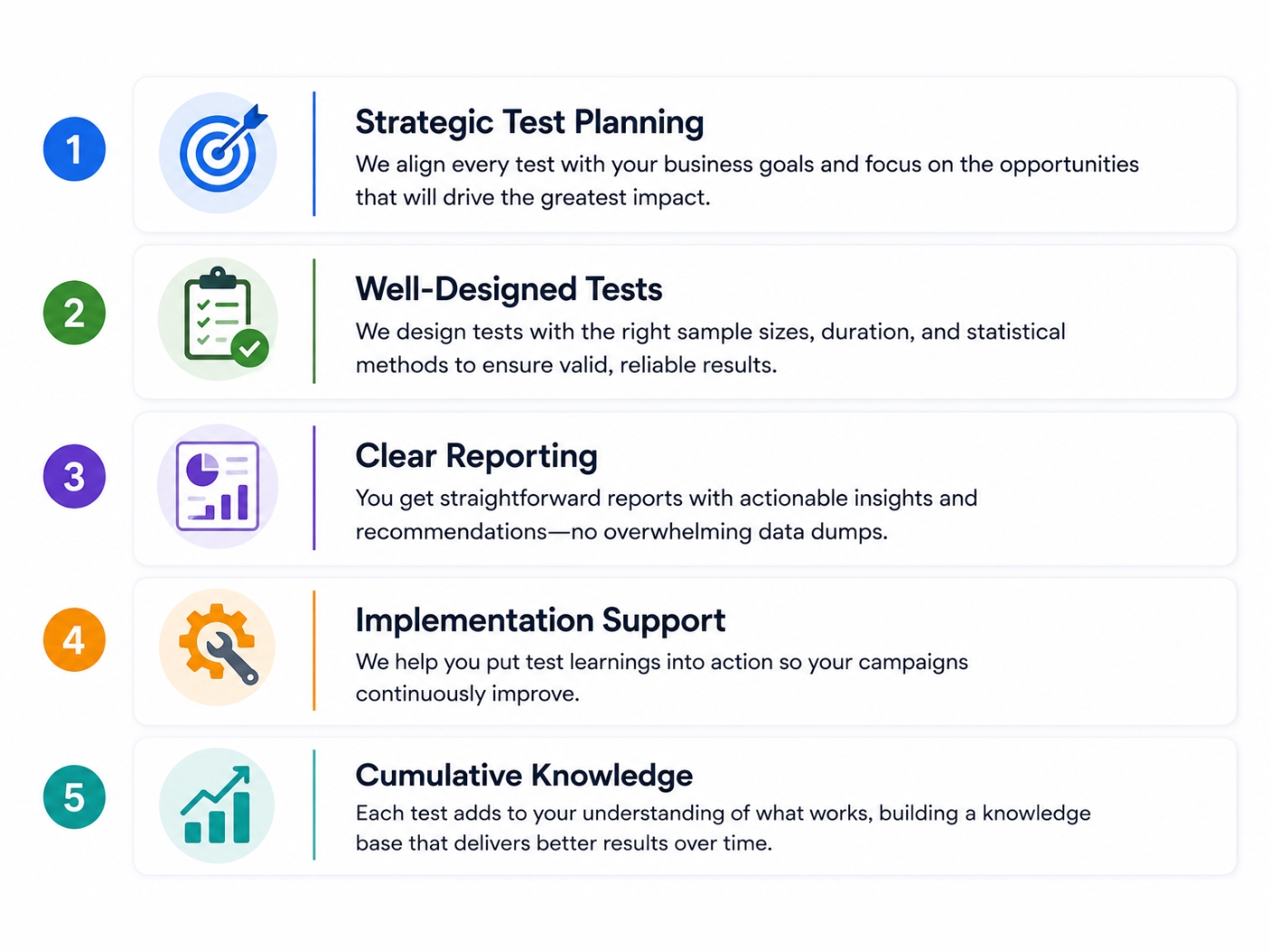
  • You receive strategic test planning aligned with business goals. We determine what to test based on where the greatest opportunities for improvement exist.
  • You receive well-designed tests that yield valid results. Sample sizes, test duration, and statistical analysis are all handled correctly.
  • You receive clear reporting explaining what the test revealed and what you should do with the results. We give you just useful insights, no data dumps to mess around with.
  • You get implementation support to ensure learnings translate into better campaigns. Testing only matters if you use what you learn.
  • You get cumulative knowledge over time. Each test gives you a better understanding of what works for your particular audience.
How to Start with Email A/B Testing

How to Start with Email A/B Testing

Starting A/B testing with ASP OL Media is easy. We start with reviewing your current email marketing program and identifying the highest-impact areas to test.

Then we build a testing roadmap that ranks tests in terms of potential impact and ease of implementation. Quick wins come first to build momentum.

We set up your first tests and oversee them through completion. You see exactly how the process works and what kind of insight testing produces.

As testing becomes routine, we move on to more sophisticated tests and build a comprehensive understanding of what drives results for your campaigns.

Email marketing performance improves through constant learning and optimization. A/B testing provides that learning in the most direct, data-driven way.

Tired of guessing? Know what works for your audience. Let ASP OL Media handle your email A/B testing.

Start Today

Ready to Supercharge
Your Email Marketing?

Join 5,000+ Indian businesses using ASP OL Media to reach more customers, drive more sales, and grow faster.

14-day free trial . No credit card . Cancel anytime