From seasonal promotions to repeat booking campaigns, ASP OL Media helps travel brands convert more inquiries into bookings. Our travel email marketing strategies keep travelers engaged between trips, strengthen customer relationships, and drive repeat business through direct, targeted communication.
Structured email programs for travel businesses. Convert more inquiries into confirmed bookings than those relying on calls or walk-ins only.
Respond to travel inquiries in seconds with automated follow-ups that keep prospects engaged and moving toward booking.
Tailor your messaging for honeymoon couples, families, solo travelers, corporate clients, and pilgrimage groups.
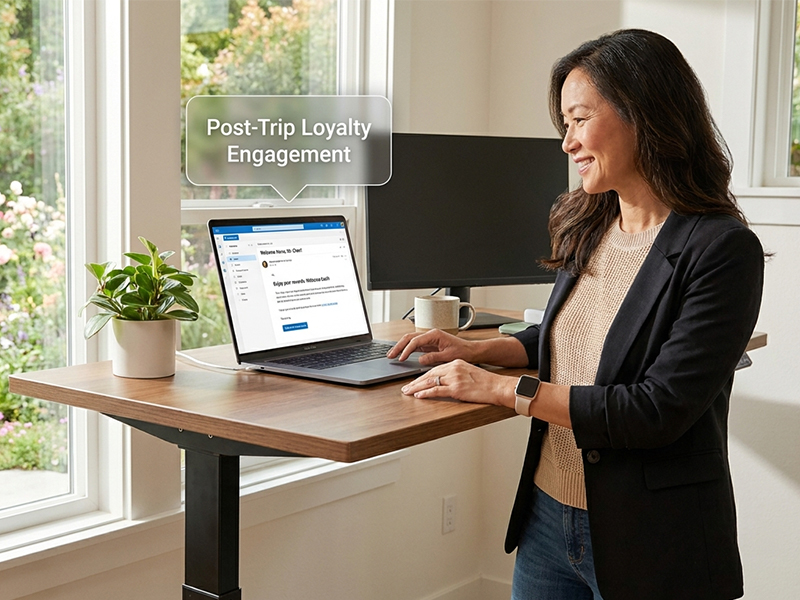
Keep your brand top of mind with post-trip campaigns that drive repeat bookings from past travelers.
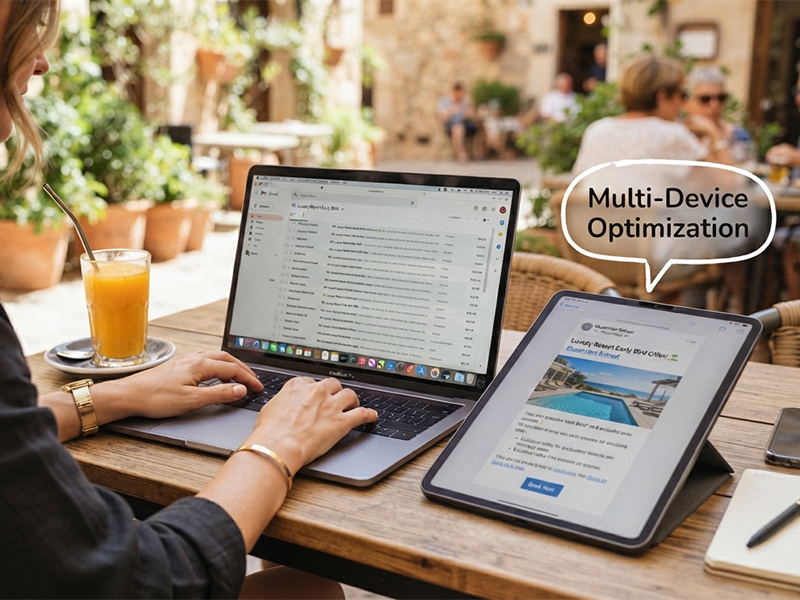
Reach travelers with the right destination and package at exactly the right point in their holiday planning cycle.
Announce new itineraries, destinations, and seasonal packages to your entire database quickly and consistently.
Track campaigns by inquiries generated, bookings confirmed, and revenue influenced rather than just opens and clicks.
Every traveler contact in your database is a direct communication channel that no OTA commission structure can touch.
Email marketing solves several problems in travel marketing. It turns inquiries into bookings, drives repeat sales, and improves your audience targeting. It also automates follow-ups, reduces reliance on OTAs, and drives consistent revenue growth.
A traveler fills out a form, receives a quote, then goes silent. Your team follows up a couple of times and then moves on. That lead is not lost; they are just not ready. With a structured email nurture sequence, your agency stays in touch automatically, sharing destination ideas, itinerary options, and booking reminders until the traveler is ready to book.
Summer holidays, Diwali, Christmas, and then silence. Email keeps your audience warm between peaks with off-season escapes, monsoon specials, and early bird packages for next season, so you’re not starting from zero each time a booking window opens.
The best candidate is someone who has already traveled with you. Most agencies, however, go quiet after the trip is over. Automated post-trip sequences, anniversary messages, and early access offers lure past travelers back to you before they book with someone else.
You pay a commission of 15-25% on every OTA booking. Email connects you directly with your audience. Previous travelers and warm leads are much more likely to book with you directly rather than via a platform that takes a cut of every sale.
A honeymooner and a pilgrim traveler have very different needs. Most travel agencies market to both, yet do so in the same way. Segmenting your audience by travel type, past booking history, and reason for travel ensures that each subscriber is receiving content that feels personally relevant.
Even a well-staffed sales team can become overwhelmed with the volume of inquiries during peak season. Automation manages the first response, follow-up sequence, and booking reminder. This way, no inquiry is left unanswered because your team is too busy to call back.
For each stage of the traveler relationship, there is a corresponding email to get them moving on. Here is what a good travel email program looks like in practice:
Inquiry Response: This email is sent within seconds of a form being submitted. It has a destination overview, package highlights, and a clear next step. It sets the tone before a competitor even picks up the phone.
Nurture Sequence: This email sequence is triggered after the inquiry response and continues for the next 7–14 days. It provides itinerary comparisons, traveler reviews, payment plan options, and destination inspiration. Each email builds trust without bombarding the prospect.
Seasonal Package Announcement: This email is sent 4-6 weeks before the peak travel window. It shows the best packages for the season, with early-bird pricing, availability highlights, and a direct link to book.
Booking Confirmation: This email is sent immediately after a booking has been confirmed. It has trip details, payment schedule, document checklist, and pre-departure information. It reduces inbound calls to your team and sets a professional tone.
Pre-Departure Sequence: This email sequence is sent the week prior to your travel. It has packing tips, weather updates, local customs, emergency contacts, and itinerary reminders. It builds excitement and reduces pre-trip anxiety.
Post-Trip Follow-Up: This email is sent within 48 hours of the return. It thanks the traveler, solicits feedback, requests a review, and recommends destinations for their next trip. It initiates the next booking cycle immediately.
Anniversary and Re-engagement Email: This message is sent on the trip anniversary or after a specified period of inactivity. It is personalized and warm, and it includes a relevant offer. It’s often the highest-converting touchpoint within a travel retention program.
Flash Sale and Last-Minute Availability: This email is triggered when you have unsold seats or last-minute inventory to fill. It is short, to the point, and urgent. It includes a booking deadline that drives immediate action.
Travel databases are diverse. It is likely that a single travel agency can have honeymooners, family groups, senior travelers, solo backpackers, corporate accounts, and pilgrimage groups, all in the same list. Sending the same email to everyone is one of the fastest ways to lose subscribers and damage your sender reputation. At ASP OL Media, we build segmentation frameworks that mirror how travel decisions are actually made:
This segmentation includes leisure, honeymoon, family, adventure, pilgrimage, corporate, and group travel. Each segment receives destination recommendations and package content based on its specific travel motivation. A couple planning a honeymoon in Bali doesn’t need to know about your Char Dham group departure.
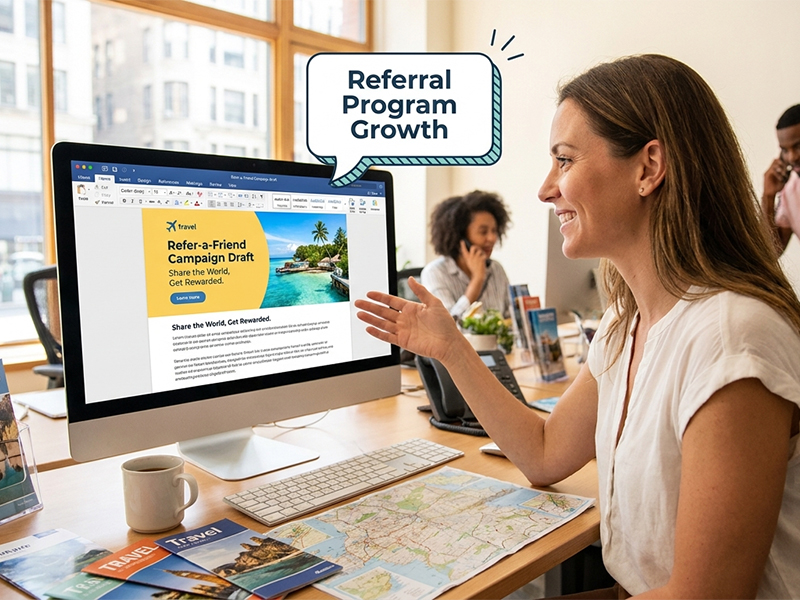
This segmentation divides customers into first-time inquirers, previous travelers, and repeat bookers, each at a different stage of trust with your agency. Past travelers receive loyalty rewards and early access. First-time inquirers receive credibility content and social proof. Repeat bookers receive VIP treatment that reflects their value to your business.
These are budget travelers, mid-range holiday planners, and luxury travel seekers. They all expect different things from a package and from your communication. The budget-based segmentation ensures that your pricing and positioning always feel relevant, not out of reach or below their expectations.
This segmentation allows travelers to receive content according to their destination preferences. If you’ve asked for international destinations, don’t send domestic budget packages in the first message. Your historical inquiry and booking data reveal where your subscribers want to go. Employ it.
The segmentation covers solo travelers, couples, families with young children, and senior groups, each with distinct practical priorities. Families want family-friendly itineraries and safe destinations. Senior groups want comfort, proximity to medical facilities, and walkable distances. Segmenting by travel party makes your recommendations feel more tailored.
This segmentation considers that travelers from metro cities have different booking windows, different budget expectations, and different destination choices compared to travelers from Tier 2 cities. Geographic segmentation allows you to tailor package recommendations and pricing accordingly.
Travel businesses that rise consistently are not the ones with the largest marketing budgets. They are the ones with the most disciplined follow-up systems. And that discipline is possible at scale with automation. You don’t need to add headcount or stretch your existing team.
An automated email is sent when a prospect submits an inquiry. The email includes destination highlights, a package overview, and a prompt to book a consultation call. This way, you are more likely to be first in their inbox before any competitor responds.
After 10 to 14 days, the infrastructure sends a structured sequence that includes social proof, itinerary details, payment options, and urgency triggers. This keeps the prospect engaged without your sales team having to manually follow up.
From confirmation to pre-departure to post-return, automated emails are triggered at each milestone. They keep the traveler informed, reduce inbound support calls, and build a professional brand experience at every touchpoint.
Based on your travel calendar, automated seasonal campaigns are sent to relevant segments at the right time. Your team doesn’t have to manually build and send out each campaign from scratch every year.
If a past traveler hasn’t booked or engaged in a defined period, an automated re-engagement sequence fires with a personalized message, a new destination recommendation based on their history, and an offer that makes it easy to come back.
An automated review request is sent out within 48 hours of a trip ending. This approach catches the traveler when their experience is freshest, and their likelihood of leaving a positive review is highest.
Travel email databases are typically large and built from multiple sources, such as inquiry forms, travel expo sign-ups, OTA customer lists, and social media lead campaigns. Without the proper infrastructure and regular list hygiene, even the best campaigns can end up in spam.
We cover the entire deliverability stack for travel senders. You have SPF, DKIM, and DMARC authentication in place across your sending domains. Dedicated IP addresses are provisioned to high-volume senders. Hard bounces are immediately deleted after each send. Inactive subscribers are handled with re-engagement sequences to stop them from impacting your engagement metrics and future inbox placement. Your list remains clean, your sender reputation remains strong, and your campaigns consistently reach the people they are meant to reach.
The first question that any travel email report should answer is, “How many bookings did this campaign generate?” We create dashboards that link campaign activity to booking outcomes, not just engagement metrics.
You’ll see which seasonal campaigns are driving the most confirmed bookings, which nurture sequences are converting the most inquiries into consultations, and which re-engagement campaigns are successfully reviving past travelers. We provide segment-level and branch-level attribution for agencies with multiple destination categories or multiple offices, so your business can track performance at the level of granularity you need.
Campaign strategy is regularly reviewed and refined, so your email program becomes smarter with every cycle, not just more frequent.
Travel marketing teams are typically small and stretched in many directions, dealing with inquiries, suppliers, operations, and social media all at once. They simply don’t have the time or the expertise to put into a sophisticated email program.
At ASP OL Media, we handle all of your email marketing needs. Strategy, content, design, segmentation, automation, deliverability, and reporting—we’ve got it all covered so your team can focus on what they do best: selling great travel experiences.
We build the program your business needs and run it for you, whether you are an independent travel agency looking to build a loyal local client base, a specialist tour operator looking to grow a niche travel segment, or an online travel platform looking to scale communication across a large subscriber base.