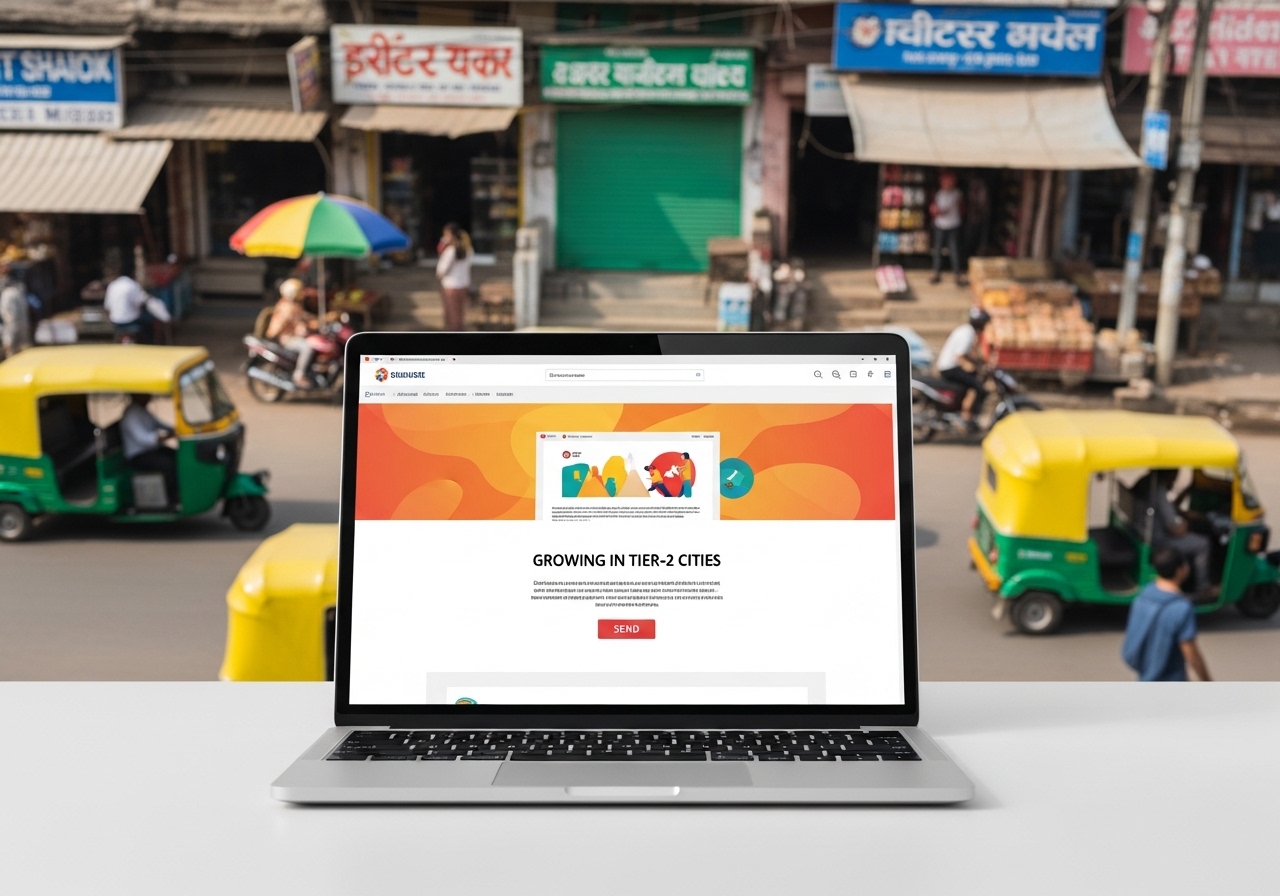
Learn How Targeted Email Campaigns Can Help Indian Businesses Build Trust
As competition is rapidly growing in metro cities, email marketing enables businesses to leverage emerging opportunities in Tier-2 cities across India. With rapid economic growth and urbanisation, Tier-2 cities such as Lucknow, Jaipur, Indore, Bhubaneswar, Patna and Chandigarh are transforming into independent centres of entrepreneurship. Affordable infrastructure, skilled talent, untapped markets and digital connectivity are drawing startups and small businesses to Tier-2 cities.
Today, with easy access to smartphones, affordable internet and digital payment systems, businesses have an excellent opportunity to connect with customers in these expanding markets. However, simply running advertisements is not enough to reach and engage with these audiences. It is crucial to have a direct, reliable and cost-effective communication channel that helps establish credibility and sustain customer relationships over time.
This is where email marketing becomes a powerful growth tool.
Unlike social media platforms, where algorithms determine who sees your content, email marketing allows businesses to communicate directly with prospects and customers. Whether you operate a travel agency, educational institution, healthcare clinic, SaaS company, retail business or real estate firm, email marketing can help you generate leads, nurture prospects, increase customer retention and drive long-term business growth in Tier-2 cities.
In this guide, we’ll explore how Indian businesses can use email marketing strategically to grow in Tier-2 cities. But first, let’s look at why these cities represent such a significant opportunity.
Understanding the Business Potential in Tier-2 Cities
Tier-2 cities are rapidly growing urban cities that offer a great balance of affordability, improved infrastructure and rising employment opportunities. The government classifies them as ‘Y Cities’. These cities rank just below the metropolitan cities in terms of size, corporate density and infrastructure, and include Jaipur, Lucknow, Chandigarh, Kochi, Coimbatore, Mysuru, Vadodara, Nashik, Patna and Ranchi. These cities are emerging as major hubs for businesses, especially real estate and IT companies.
For several years, businesses focused on investing their advertising budgets in metropolitan cities because of the large customer base. But today, Tier-2 cities are also becoming India’s promising growth market. Here are the most common reasons for this:
- Lower Competition: Most businesses compete in the metro market, so there is less competition in the Tier-2 city market. This creates opportunities for businesses to establish a strong local business presence.
- Rise of Digital Connectivity: Affordable data and widespread mobile usage have made online communication easy for businesses to reach a wide audience.
- Disposable Income: Economic development and employment opportunities have increased spending power in Y cities. So, consumers are willing to spend on education, healthcare, travel, technology, home improvement, financial services and lifestyle products.
Because of these developments, businesses are connecting with consumers in Tier-2 cities and expanding their reach. For this, they are leveraging email marketing services.
How Indian Businesses Can Use Email Marketing to Grow in Tier-2 Cities
Once you know the potential of email marketing in non-metro or Tier-2 cities, the next step is to develop a strategy that helps you attract subscribers, engage prospects, and encourage them to convert into customers.
Here are the key elements of a successful email marketing strategy that most businesses utilise to grow in Tier-2 cities across India:
1) Build a High-Quality Email List
You cannot send emails to your prospects without having their email IDs. Buying an email list is tempting, but it carries legal liabilities and deliverability risks. Hence, you should create your own high-quality email list. Here is how businesses in regional cities build an email list that converts, and you can do the same for your business:
- Convert Store Visitors into Email Subscribers: If you run a store in Udaipur, getting subscribers to your email list is quite easy. Print a QR code on the bill that says “Scan and get Rs. 50 off on your next purchase”. Send the coupon via email. The incentive should be instant and specific. A generic “Sign up for our newsletter” prompt rarely works, but a festive-season offer tied to an instant reward does.
- Utilise Your Website: Your website is one of the best places to collect email addresses of your customers or prospects. Add newsletter forms, inquiry forms, guides and other useful resources that encourage customers to share their email address. But make sure to keep the process simple and explain what customers will get in return, such as a quotation, price list, product list, etc.
- Collect Data from Local Events: You can collect email addresses by doing offline interactions with prospects at seminars, exhibitions, trade fairs and other events. This helps you generate highly qualified leads, as the customers have already shown interest in your products or services.
Building your email list organically may take longer than expected, but it is worthwhile. Always avoid buying a list, as this leads to poor engagement, higher unsubscribe rates and spam complaints.
2) Segment Audience
Once you build your email list, the next step is organising your audience into different groups. You should not only blast emails but also start targeting your audience. This is important, as it enables you to send more relevant and personalised emails to customers. The process is called audience segmentation. To grow your business in smaller cities, you should segment the audience based on:
- The city and the PIN code: Segment the audience based on their location so that you can send a relevant email. A customer in Lucknow does not care about same-day delivery in Patna. So, categorise the audience by city and the PIN code you serve most often. Mention the city name in the subject line to grab the prospect’s attention.
- Language preferences: It helps build customer trust and loyalty. In many regions, people prefer their native languages even in emails. During the email signup, a simple checkbox for “Prefer Emails in Hindi / Tamil / Marathi?” will help a lot. This increases the open rates. If you can’t translate the entire email, then at least write the subject line or preheaders in the local language.
- Festival calendar: India’s festival calendar changes by region and state. You will have to create a festival calendar for each state to send relevant offers. For example, Diwali discounts in North India, Pongal offers in Southern India, Ganesh Chaturthi offers in Maharashtra, Bihu offers in Assam, and so on. Segmenting the audience will help you send the right festive-season offer to the right audience. Start the campaign a bit earlier than in metro cities because preparation starts sooner here.
- Purchase history: This tells you a lot about the customer; use it to send more relevant emails. A customer who bought a saree for Rs. 2,000 is different from one who bought a Rs. 250 Dupatta. You shouldn’t send the premium collections to both. Rather, send the premium collection email to the first customer and a combo offer to the second. This prevents them from unsubscribing from irrelevant messages.
3) Create Content that Resonates with Local Audience
Building an email list and segmenting the audience is only the beginning of the process. The main part is creating content that encourages your audience to connect and engage. Your email has only three seconds to win customers’ attention. Hence, you must create compelling email content. Here’s how to write for it:
- Keep the language simple: Many businesses make the common mistake of using technical jargon or overly formal language, which is quite difficult for everyone to understand. Effective email marketing is conversational and easy to understand. Instead of highlighting the product's features, explain how your product or service benefits the customer. Simple language increases readability and helps customers understand the value your service offers.
- Focus on the first 40-character rule: Customers cannot see the entire content because most phones show only the first few characters of the subject and preheader. So, try to fit the offer and location within the first 40 characters. This encourages people to open and read the email. Consider the phones people commonly use and test on such mobile phones.
- Use images, but smartly: Everyone uses images in their email, but you will have to be smart to convince your customer to make the final purchase. For example, if you sell clothes, send the catalogue, but make sure to avoid using foreign models.
4) Personalise Your Campaign
Sending one email to every subscriber rarely produces results. Most people want relevant content based on their interests, preferences, or the stage of the buying journey. Hence, businesses in secondary cities focus on creating more relevant and personalised emails.
For example, a travel agency should send a customised domestic tour package to the customer who has previously booked one or shown interest in domestic travel. And they should send an international tour package to the customer interested in travelling overseas. Similarly, a SaaS company should send the beginner guide to a new lead and a new package or offer to an existing client.
Personalisation is as simple as addressing the subscriber by their name. Instead of sending ‘Hi customer", say ‘Hi (Name)’. You can even craft the email based on their previous purchase. This way, the recipient will find the email more relevant to them, and they will be more likely to open, read and act on it.
5) Optimise Emails for Mobile
In today’s digital era, smartphones are the primary way the vast majority of the global population accesses information, communicates, and navigates daily life. In Tier-2 cities across India, most people use their mobile phones instead of a desktop. Businesses must optimise their emails for smartphones because if customers struggle to read or navigate them, they will simply ignore them.
Businesses must use mobile-friendly emails with a clear layout, clickable buttons, a visible font size, and short paragraphs. Also, ensure the subject line is concise and displays appropriately on the screen.
So, before launching email marketing, test it on different devices to ensure a smooth user experience. Mobile-friendly emails not only improve user engagement but also increase the chance of clicks and conversions.
6) Use Email Automation to Nurture Leads
It is common for customers from second-Tier cities in India to take a long time to think and research before the final purchase. They don’t buy a product immediately; instead, they spend time analysing things and comparing them to find the most valuable product from a known brand. Email automation helps businesses stay connected with these prospects without having to manually send follow-up emails.
Automated email sequences can include a welcome email for a new subscriber, educational content, a user guide, a how-to guide, and other offers. For example, if someone downloads a guide from your website, they automatically receive an email series explaining how to use your product or service.
Automation helps nurture leads by maintaining consistent communication with prospects until they become customers. Since the emails are sent automatically, the marketing team can focus on other important things.
7) Track Results and Improve Future Campaigns
Running an email marketing campaign is not just about blasting emails; it is also about monitoring campaign performance. Businesses that monitor their campaigns continuously can make timely adjustments to improve results.
Track these key metrics to understand what is working: open rate, click-through rate, conversion rate, bounce rate, and unsubscribe rate. For example, if open rates are low, then you may need to change the subject line. If subscribers are opening the email but are not clicking on the link, the CTA (Call to Action) or the content needs to be changed.
If you regularly analyse these metrics, you will understand customer preferences and optimise your future email campaigns. Over time, such small changes will result in better engagement, more leads, and higher sales.
Why Email Marketing Works Better in Tier-2 Cities
Social media has definitely revolutionised the way Indian businesses connect with their consumers. However, depending solely on social media ads can be risky. This is because the algorithm decides who will see your ad. Since the algorithm changes quickly, the chances of organic reach decrease. Besides, the cost of paid advertising increases, which often causes businesses to struggle to maintain constant visibility.
On the other hand, email marketing offers several advantages, which is why Indian businesses invest in email marketing to grow in secondary cities.
Direct Communication with Consumer
One of the top reasons why brands still use email marketing is the direct line of communication it provides between the company and its customers. Once your customer subscribes to your newsletter or mailing list, you can send them offers and deals directly through email without depending on a third-party algorithm.
Cost-Effective Marketing
Email marketing is highly affordable, which makes it an attractive option for small and medium-sized businesses looking to expand into Tier-2 markets without exceeding their marketing budget.
It enables you to reach thousands of customers at a fraction of the cost of traditional advertising. Most email marketing service providers in India charge a nominal price for the campaign, which costs only a few paise per email. Hoardings, billboards, or even social media ads will let you reach only a limited audience, even after spending lakhs. But with email marketing, you will reach the right audience at the right time.
Strengthen Customer Confidence Over Time
Consumers in smaller cities take time to buy a product or service. They prefer to buy from brands they trust. And trust can be built over time with regular emails that provide information or educate the customer. Regular email communication with customers helps businesses establish credibility by sharing customer reviews, industry insights, customer success stories and other resources. Over time, this consistent engagement strengthens customers’ confidence and increases the likelihood of conversion.
Landing in your subscribers’ inboxes regularly keeps your brand top of mind. They will remember your brand when they need to buy your service or product.
Supports Long Buying Cycle
No consumer makes an instant decision to buy a product or service. They take time to think, compare, and then decide. Email marketing supports long buying cycles, especially in industries like education, real estate, software and financial services, which often involve longer decision-making processes.
Email marketing allows businesses to stay connected with their prospects throughout their buying journey. Instead of losing potential customers after the initial inquiry, brands can nurture leads by sending email sequences until the buyer is ready to make the final purchase.
Easy Performance Tracking
Email marketing is highly measurable. Unlike other traditional marketing channels, email marketing provides you with measurable results. The metrics, including open rates, click-through rates, bounce rates, conversion rates, and unsubscribe rates, help you refine your campaign over time.
These insights help brands and investors understand what resonates with their audience and make adequate changes in their campaigns for better results.
Ready to Grow Your Business in Tier-2 Markets?
If you are ready to reach a wider audience, generate quality leads, and grow your business in non-metro cities or small towns, then it’s time for you to invest in a strategic email marketing campaign. ASP OL Media provides professional email marketing services tailored to your business needs, including audience segmentation, design templates, and performance tracking. Contact us today to know how you can use email marketing to grow your business in India’s fast-developing markets.
Ready to send campaigns that convert?
Try ASP OL Media free for 14 days — no credit card required.