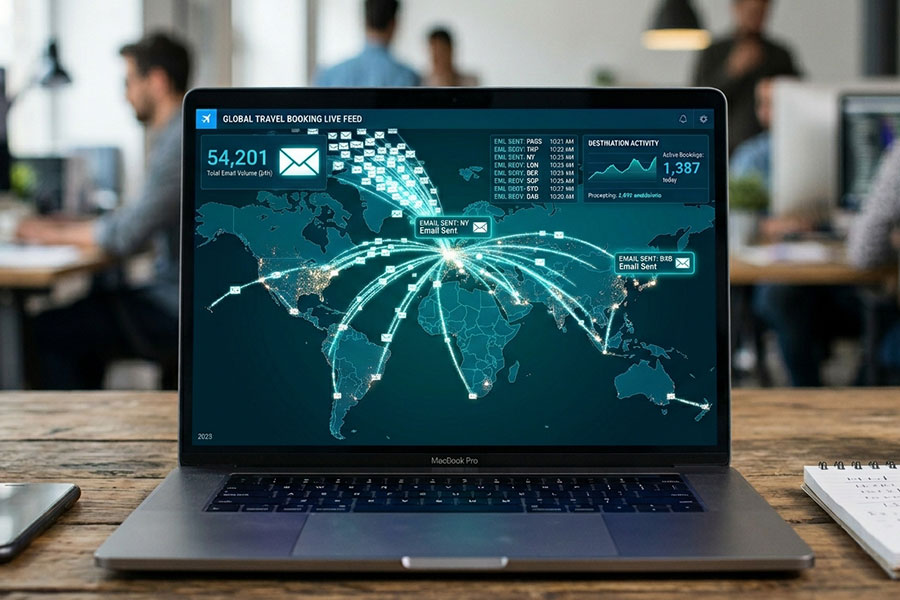
Bulk Email Marketing for Tour Operators
Tour operators need faster and more cost-effective ways to promote their travel packages, seasonal offers and destination updates. Bulk email marketing allows tour and travel companies to reach thousands of travellers instantly while maintaining personalised communication. Not only does it help you attract guests, but it also helps build strong relationships that encourage repeat visits.
However, bulk email marketing does not drive bookings and repeat visits by chance. It does when you combine the best strategy with the right tools. Because social media is so active and demanding, businesses often end up giving less importance to or delaying email marketing.
Yet what most tour operators don’t realise is that bulk email marketing is still the most effective way to reach thousands of travellers instantly, build loyalty and drive bookings.
Email marketing is the most cost-effective channel to scale outreach. Unlike cold calling and physical events, email enables businesses to communicate with thousands of customers simultaneously while using data to keep content relevant.
In this guide, you will learn the importance of bulk email marketing and how tour operators like you can use it to build trust in your brand and keep your audience loyal.
What Is Bulk Email Marketing for Tour Operators
Bulk email marketing is the process of sending emails to thousands of subscribers at once. For tour operators, email marketing is a channel for sending targeted and mass promotional emails, such as travel packages, seasonal offers, destination highlights, limited-time discounts and package announcements.
Instead of communicating with every traveller, tour operators can design and share a campaign with a large list of subscribers simultaneously. This allows businesses to scale marketing efforts, nurture leads and drive direct bookings without manually managing communication.
For example, a tour agency can design and launch a summer holiday package. Instead of posting the offer on social media, the tour operator can directly send an email to their large subscriber list. Interested customers can click the booking link and complete the reservation.
Social media controls the visibility of your ad and brand, but email marketing offers the advantage of direct communication. You can reach customers directly in their inboxes, unlike Facebook or Instagram ads, where algorithms decide who will see your ads.
Email marketing campaigns are used for:
- Promoting seasonal travel packages
- Sharing limited-time discounts
- Encouraging repeat customers
- Sending newsletters and travel destinations
- Recovering abandoned bookings
- Announcing new destinations
Why Tour Operators Use Bulk Email Marketing
Email marketing allows a business to reach thousands of customers instantly and build trust through direct communication. Besides, it offers several other advantages that often improve customer engagement, increase bookings and support overall business growth.
Lead Nurturing
Not every traveller is ready to convert immediately. Some take longer than expected. They start planning months in advance because they need time to compare prices and packages to choose the best one. You may find them browsing and inquiring about your packages, but then they move to another portal or website.
Email marketing lets you stay connected with these potential customers by sharing useful content, destination updates, travel tips and offers. Not only will you engage with your customers, but you will also encourage them to complete their bookings.
Direct Booking
Some tour agencies use third-party apps and OTAs to get leads. However, the OTAs charge 15-20% commission, which makes the conversion process expensive for the tour operators. Email marketing provides a way to contact your customers directly and drive traffic straight to your booking platform.
Tour operators can send tour package offers, discounts, personalised offers and limited-time deals with a booking link directly to customers. The interested customer can click on the link and complete the booking. This simplifies the customer journey and increases the likelihood of converting interest into confirmed reservations.
Encourage Repeat Visits
Attracting customers is essential, but repeat customers are extremely important for companies in the tourism industry. This helps create stable growth, lower marketing costs and long-term customer relationships. Instead of finding new customers, businesses can encourage previous customers to return.
By creating a follow-up email campaign, tour operators can reconnect with previous customers and encourage them to book again by offering loyalty rewards, seasonal offers and personalised recommendations. These efforts encourage your customers to return and book packages for future trips.
Higher Return On Investment
Compared to many traditional and digital channels, email marketing delivers higher value at a lower cost. This happens because bulk email campaigns let you reach thousands of people simultaneously at a very low cost. It gives you a higher ROI because:
- It requires less investment and offers a large reach.
- You market to people who already know or are interested in your brand.
- Repeat customers increase revenue.
For example, if you are investing Rs. 5000 in email marketing, you earn Rs. 25000 from a single booking. So, imagine that with the same investment, you will reach thousands of customers. Even a single conversion may deliver returns several times more than the amount spent on the campaign.
Because businesses can directly communicate and promote targeted offers, email marketing often produces a higher return on investment and supports sustainable business growth.
Common Types of Bulk Email Campaigns Tour Operators Should Run
Bulk email marketing is one of the most affordable and scalable channels for tour operators. While blasting promotional emails helps you attract travellers, a drip campaign helps with lead nurturing and ultimately converts travel-curious website visitors into customers by keeping your brand top-of-mind over time.
Here are the different types of emails that tour agencies should send to their travellers and prospects, depending on the travel stage, customer interests and goals.
Promotional Emails
As the name suggests, promotional emails contain business promotion content. This means a tour operator can promote a tour package, a new package launch, limited-time discounts or offers and exclusive booking opportunities for their previous customers.
For example, you can send an email saying, “Book our summer vacation package before 30th June and get a complimentary breakfast”.
The main objective of these emails is to create a sense of urgency for subscribers by offering limited-time offers that prompt immediate action.
Newsletter Emails
Not every email should focus on selling. People trust you more when they see you as an advisor rather than a seller. They want to know who you are first, and then to inquire what exactly you have for them. Destination newsletter emails let you share valuable content such as travel guides, travel tips, local experiences and recommendations. Such emails help maintain customer interest in the destination and strengthen the relationship.
For example, send an email that says “5 hidden beaches to visit this season,” or you can create curiosity by saying, “5 hidden beaches to visit this season. The 4th one is the hidden gem”.
By sharing deep knowledge and local experience, you will pique their curiosity about the destination. Ultimately, they would like to book the tour package from you.
Seasonal Campaign Emails
Not every customer has the same requirements. Their travel demand often changes throughout the season. An email campaign allows you to engage travellers and highlight your new seasonal offers. This helps tour operators like you to promote packages during peak travel periods by blasting:
- Summer vacation packages
- Winter holiday packages
- Festive travel offers
- New Year getaway campaigns
Seasonal campaigns are an effective way to stay connected with potential customers by sending relevant content and promoting your packages that align with their interests and travel behaviour.
Last-Minute Deal Emails
Such emails are used to drive direct bookings through limited-time, festive or event-based offers. Many tour operators do this to fill the remaining package availability. Last-minute emails promote short-term offers to travellers who may be ready to travel immediately.
For example, a tour operator releases a batch every Friday for a weekend trip from Delhi to Uttarakhand. If the operator does not get enough bookings to fill the package, they send last-minute deal emails. “Looking for a Weekend Escape? Limited Offers for Couples”.
Customer Retention Emails
Customer retention is the backbone of the tourism industry. Most companies achieve sustainable growth through repeat visits because this requires less marketing effort and expense. Customer retention emails are sent to existing customers to keep them engaged, encourage repeat purchases and strengthen long-term relationships with the business.
These emails include loyalty rewards, special discounts, anniversary offers or personalised destination suggestions. Such emails help maintain relationships with customers, which is beneficial for the company’s long-term growth.
How Bulk Email Campaign Works for Tour Operators
Successful email campaigns follow a structured process rather than simply sending promotional messages. Here’s how a bulk email campaign works for tour operators like you:
Build an Email List
Having a list of customers is the crucial part of a bulk email campaign. Sending your offers to a random contact will lead you nowhere. This will increase bounce rates, which may later affect sender reputation. Hence, you must have a quality email list, which you can create by collecting email addresses from people who are actually interested in your brand.
Tour operators can collect email addresses through:
- Website forms/inquiry forms
- Previous bookings
- Event registrations
- Newsletter subscriptions
Segment Travellers
Once you’ve built the list, it’s time to segment the audience. Not every traveller will be interested in your summer holiday package. So, instead of sending a single random email to everyone, segment your audience by interests, past bookings and behaviour and send relevant emails to each segment.
This allows you to send more relevant emails to a specific audience, increasing the likelihood of conversions and repeat visits. You can segment the audience by traveller type and interests. For example:
- Family travellers
- Solo travellers
- International travellers
- Adventure seekers
- Repeat customers
Design Attractive Emails
Once you segment the audience, the next step is to create an email that captures attention and prompts customers to take action. However, your email should remain simple yet visually appealing, addressing travellers’ major concerns and challenges. Include clear headlines in your email, add a short description about the trip, show images and share booking details.
However, ensure that you avoid overcrowding the email with too much text and too many visuals. A clean structure improves readability and creates better experiences for the customer.
Send and Monitor Campaign Results
After creating and sending the email, you should monitor the campaign to analyse its performance. This helps you understand if the campaign is working and where improvements are needed. Monitoring the essential metrics, such as open rates, click rates, unsubscribes and booking conversions, helps tour operators optimise future campaigns, improve engagement and make better marketing decisions over time.
Bulk Email Marketing Best Practices for Tour Operators to Increase Bookings
We have already discussed the importance and advantages of bulk email marketing. However, simply sending promotional emails is not enough. Travellers receive countless emails every day from your competitors. To stand out from the crowd, your content needs to feel relevant, valuable and timely to capture attention and encourage action.
Following best practices in email marketing can improve engagement and convert subscribers into bookings. So, here are some bulk email marketing best practices that every tour operator must follow for better results:
Personalise the Message
Travellers respond better when the email feels relevant. You can personalise the email by addressing customers by name. Instead of sending a random email with no name, greet the customer by saying “Hi (name)!”
Apart from this, you can craft the email based on their previous travel experience, recommended destinations or interests. Send them personalised offers that are exclusively for them. Such personalised offers are more useful for customer retention.
Write a Strong Subject Line
As you know, the subject line of an email is the first thing that the recipient sees. Hence, it is the most important part of the bulk email marketing campaign. This not only increases open rates but also sparks curiosity, leading to greater customer engagement. Hence, you should write a strong subject line every time you send an email.
For example, if you send emails with two different subject lines, “Check out our latest travel package” and another one with “Discover your next weekend getaway - special offers inside”. Then the second subject line will perform better.
However, ensure the subject line is clear and concise.
Optimise for Mobile
Most customers open their emails on mobile. Hence, you must ensure that the emails open successfully on mobile phones. Optimise your email for mobile to ensure it has:
- Responsive layout
- Readable text
- Fast-loading visuals
- Easy-to-click buttons
Maintain Email Frequency
Though it is important to send regular emails to maintain customer relationships, sending too often can overwhelm your subscribers, leading them to unsubscribe. Sending nothing at all will also lead to the loss of customers. Hence, you will have to maintain a balance in email sending frequency.
Test Before Sending
Testing the emails before sending ensures your campaign looks professional, reaches inboxes correctly and avoids mistakes.
Before blasting emails, test the email by sending it to your own email address to check:
- If the email opens properly on mobile and desktop.
- The formatting, spacing and readability.
- Whether the subject line is clear.
- Whether the CTA button and links work.
Add a Strong Call-to-Action (CTA)
Adding a strong call-to-action (CTA) means including a clear instruction that tells the customer what to do next. A CTA guides a customer rather than leaving them guessing about what to do. For example, instead of simply saying “Learn More”, you can add a CTA:
- Book Your Trip Today
- Reserve Your Hotel Stay
- Claim Your Discount Now
Depending on the type of email you are sending, add the CTA. This encourages readers to take a specific action that helps achieve your marketing goals.
Focus on Value and Not Only Constant Promotion
Many tour operators make the mistake of over-promoting their packages. We understand that the ultimate goal of a travel agency is to sell packages, but a traveller wants to trust the company first. To build trust and credibility, you should focus more on providing value to your customers by sharing informative content, such as travel tips, destination guides, seasonal suggestions and personal recommendations.
Customers engage more when they see you as an expert in the industry. After engaging with your content, they might become customers by booking your travel package. So, send value-driven emails that improve trust and long-term engagement.
Conclusion
Bulk email marketing helps tour operators instantly promote packages to thousands, maintain customer relationships and increase bookings. However, success and business growth depend on targeting the right audience, delivering valuable content and continuously optimising campaigns.
When used strategically, bulk email marketing becomes more than just a promotional channel. It helps tour operators stay connected with travellers, build trust, encourage repeat bookings and create sustainable growth.
Ready to send campaigns that convert?
Try ASP OL Media free for 14 days — no credit card required.