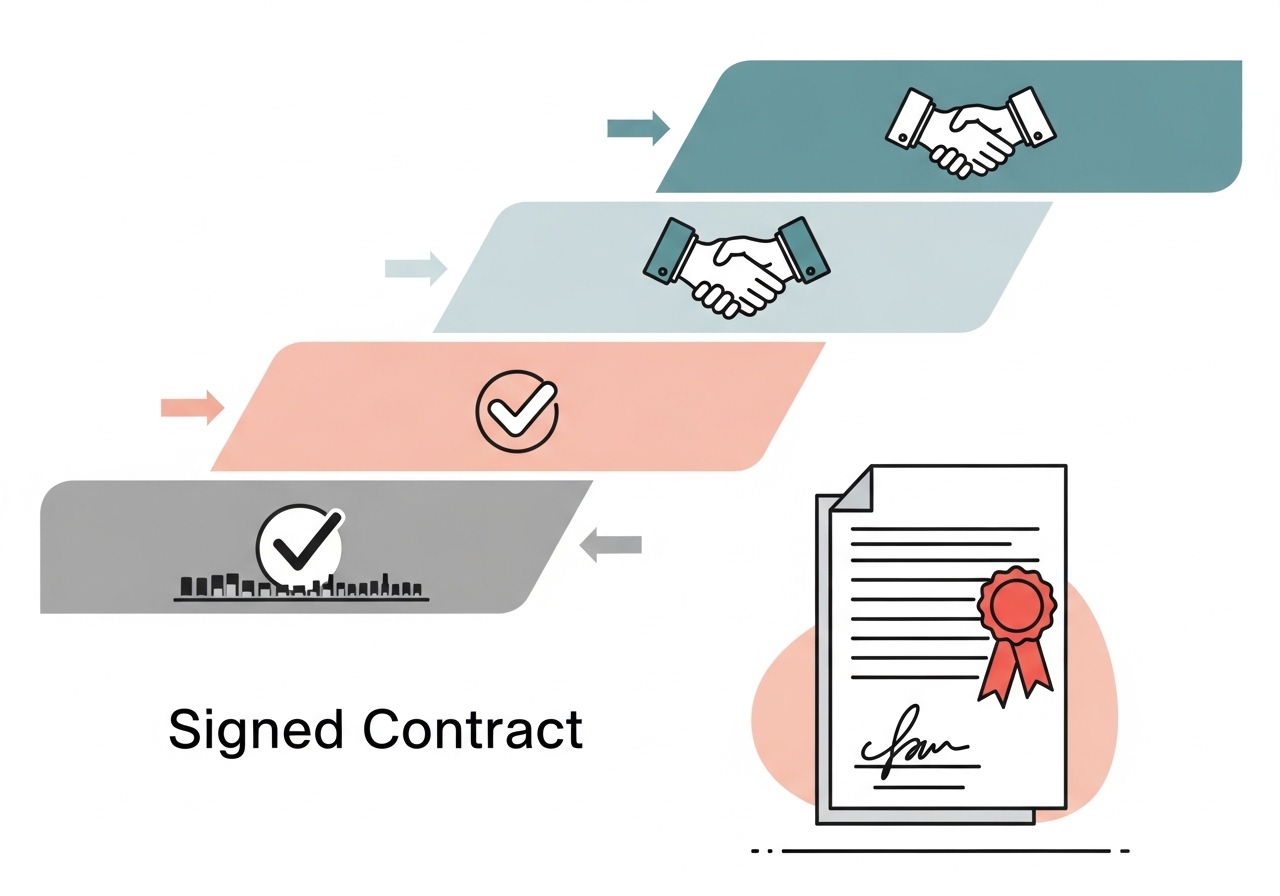
Turn Interest into Revenue with Targeted B2B Email Nurturing Campaigns
Most IT cold emails get ignored. Even the demos get ghosted because most CIOs do not buy IT contracts from an unknown service provider. B2B email nurturing for IT services isn’t optional anymore. A simple email with “we provide cybersecurity services” to a cold prospect will not lead to a signed contract. B2B IT deals take longer than usual. The process involves multiple stakeholders for the final decision. If you stop sending emails after trying twice, you will be invisible when they are finally ready to purchase.
This guide provides B2B email nurturing for the IT services roadmap, showing you how to stay top of mind with stakeholders and convert cold prospects into signed contracts. No spam, no “spray and pray,” only the best tactics that move the deals forward.
Why Cold Emails Do Not Close Deals Anymore
In today’s competitive digital landscape, IT services are rarely impulse purchases. Almost every second company is offering the best IT deals, but no one wakes up, checks their inbox and outsources their entire network to a stranger. Cloud migrations, cybersecurity protocols and enterprise software are high-trust, high-cost decisions that companies take 3-9 months to make. One wrong vendor can mean downtime, breaches or even a fired IT manager.
Where’s The Problem?
The problem lies in your pitching. Since IT services are a costly investment, no VP chooses a random service provider. Sending a random email with “We are an MSP with 24/7 support” will not help you win. You cannot even expect a reply because IT leaders don’t buy from strangers. An IT decision-maker receives hundreds of emails every day, all making similar claims. As a result, a company that has never interacted with you before is unlikely to trust you based on just one email.
Most service providers give up after sending one or two emails. B2B deals require regular interactions before a decision is made. When you fail to sustain prospect engagement through email nurturing, that gap is exactly where your competitor steps in.
The Solution: Nurturing Email and Not Only Pitching
Email nurturing is the best solution to convert a cold prospect into a signed contract. Instead of expecting a response by sending only one email, reliable and successful IT companies stay in touch with B2B companies by sharing useful content, industry insights, case studies and practical guides over time. Each email builds familiarity and trust.
Well, email nurturing is not just about sending constant emails asking buyers to buy from you; it’s also about being helpful until they are ready to buy.
Think of it this way: a company doesn’t buy IT services every day. They might need cybersecurity services in six months or cloud migration next year. In this case, you will have to be consistent with your email nurturing. The company is likely to ignore you if you only contact them when trying to make a sale.
But what’s email nurturing for IT services, and how does it help you go from cold prospect to signed contract without being spammy?
Let’s understand this and also the email nurturing strategies that get you replies and what closes the contracts.
What is Email Nurturing?
Email nurturing is a strategic practice of sending automated emails to your prospects or existing customers over a period of time to encourage them to buy your products or services. The automated email sequence delivers the right message at the right time. Unlike one-off email blasts, nurturing is an ongoing conversation with prospects to build trust and maintain a relationship by sharing relevant content, educating them about your brand and gently encouraging them towards purchase or a specific action.
Lead Generation Vs. Lead Nurturing
While discussing email nurturing, it’s important to understand the difference between lead generation and lead nurturing. Many people use them interchangeably, but they serve different purposes in the sales process.
- Lead generation focuses on attracting potential customers, while lead nurturing is about building relationships with them.
- The goal of lead generation is to collect leads, while lead nurturing aims to convert them into customers.
- Lead generation is the first step in the sales funnel, while lead nurturing occurs throughout it.
- SEO, PPC and social media campaigns are examples of lead generation. Email campaigns, case studies, newsletters, follow-up sequences and webinars are examples of lead nurturing.
In short, lead generation is the process of getting a customer into your pipeline, and lead nurturing is the process of moving them toward a purchase decision.
Why IT Companies Need a Nurturing Strategy
Selling IT services is different from selling low-cost products or services. IT services like cybersecurity, cloud migration or software development contracts require a significant amount of investment. Buyers are not looking for flashy messages, but they need reliability, expertise and risk reduction.
However, over 95% of buyers are not actively in the market to purchase at any given time. They often need a long time to decide. Hence, a B2B email nurturing strategy is essential for IT companies. It bridges the gap between the initial brand discovery and final purchase. With an automated email sequence, you build trust and maintain relationships over time by sharing industry insights and educating decision-makers throughout the complex buying journey.
IT purchases involve multiple stakeholders. Each one of them focuses on different concerns. Some focus on the technical part, while others focus on ROI, security or the implementation risks. Because of these complexities, a B2B email nurturing strategy is crucial for IT companies that focus on educating prospects instead of continuously selling to them.
Understand the IT Buyers’ Journey
Before you develop the email sequence, it is important to understand how IT buyers make decisions. The prospect’s needs shift as they reach the final purchase decision, so your email content should adapt accordingly.
Email nurturing is not only about maintaining contact but also about optimising your sales process and enhancing your marketing strategies. Most buying decisions are a long journey, including different stages, each requiring different information. To nurture leads effectively, IT service providers must create and send content based on where the buyer is in their buying journey:
Awareness Stage
It’s the first stage: identifying the IT problems a business faces. Prospects know they have a problem and are looking for the solution, not the vendors. If you send emails that highlight the same situation others in the industry are facing, prospects are more likely to relate to the content. Such an approach increases open rates and engagement rates.
For instance, if a company is experiencing frequent downtime, cybersecurity threats or increasing cloud costs, then sending the following emails will be helpful:
- Educational blog posts
- Industry reports
- Threat assessments
- Best-practice guides
- Trend analysis
At this stage, you will educate the prospect and help them better understand their problem.
Consideration Stage
Once the decision-makers understand the problem, they start exploring solutions. They even compare cloud providers, cybersecurity services, managed IT support and software development partners.
So, your email content should focus on:
- Expert insights
- Solution guides
- Comparison articles
- Migration checklists
- ROI calculators
Evaluation Stage
The next stage is the comparison stage. Buyers have shortlisted the service providers that match their needs. Now, they will start comparing service providers to determine which company best fits their needs. If you don't reach their inbox at this stage, your competitors will close the deal. So, you should automate emails with customised content that includes the following:
- Certifications
- Case studies
- Client testimonials
- Industry-specific examples
- Success stories
At this stage, the company's goal is to build credibility and demonstrate proven expertise to stand out from the crowd.
Decision Stage
It’s the time when buyers narrow down their list of IT service providers based on the solutions they provide. Only those companies that made it to the final stage kept sharing emails and showed up here. Now, prospects seek direct engagement with the service provider to finally decide which company to choose.
So, at this stage, you should send an email that includes:
- Consultation offers
- Product demonstration
- Free assessment
- Proposal discussions
- FAQs to address common concerns
Ensure you address all prospects’ doubts and make it easier for them to move forward with your IT services.
Purchase Stage
This phase is the final stage before signing the contract. Although the buyer has decided to move forward with your proposal, regular communication is important. The prospect needs assurance that they have chosen the right service provider.
So, even at this stage, you should send an email that must focus on the following:
- Onboarding information
- Project timelines
- Implementation plans
- Welcome messages
- Customer success resources
Your goal is to create confidence and ensure a smooth transition from cold prospect to signed contract.
When the email content matches the buyer’s journey stages and shares the useful information the prospects require at the right time, it is more likely to progress them towards purchasing. Once you understand the buyer's IT journey, you will be able to sequence the emails correctly to lead a cold prospect to your client.
Roadmap for Building an Effective Email Nurturing Funnel
A successful email nurturing campaign doesn’t begin with sending emails. It starts with building a structured funnel to attract the right prospects, organise them based on their needs and send relevant emails automatically. Without a proper nurturing funnel strategy, you risk your IT company by sending generic messages that fail to attract potential clients.
Here’s your roadmap to build an effective email nurturing funnel:
1) Capture Qualified Leads
The first step of the nurturing funnel is to target the audience that is genuinely interested in buying IT services. Instead of buying an email list and sending emails to a broad audience, you should focus on generating qualified leads through valuable content and resources.
Here are the different lead generation channels you can use:
- Website forms, such as quote or enquiry forms, are used for consultation or service enquiries.
- Whitepapers provide in-depth insights into important topics.
- Webinars help prospects understand market trends and challenges.
- Case studies showcase successful stories and measurable results.
If a prospect downloads a resource, fills out the enquiry form or registers for a webinar, they enter your nurturing funnel. This gives you an opportunity to build a relationship with the potential client.
2) Segment Leads
Segmenting the leads is crucial because this helps you craft your emails the right way. Not every prospect has the same requirements. A healthcare company requiring cybersecurity services is completely different from a retail business seeking a cloud solution. Therefore, segmentation is important because it helps you send relevant emails.
Segment the leads based on:
- Industry
- Location
- Company size
- Service interest
- Lead sources
Segmentation helps ensure the prospects receive relevant content to their business needs and challenges. This increases the chances of conversion.
3) Create Automated Workflows
When leads are segmented, automated workflows will deliver the right content at the right time. Automated workflows are email series that are sent to prospects based on their actions.
For example, if a buyer downloads the cloud migration guide, automated emails will be sent, such as:
- A thank-you email immediately
- A cloud migration checklist after 2 days
- A related case study after 5 days
- An invitation for a free consultation after 7 days
Behavioural targeting makes automation even more effective. If a prospect clicks on cybersecurity content multiple times, the system automatically sends additional cybersecurity resources.
By combining all of these, IT companies can nurture leads efficiently until the prospect is ready to move toward a signed contract.
The Ideal Email Sequence IT Companies Should Use
This is your 6-step email nurture path that helps you convert a cold prospect into a signed contract. Here’s what you should include in all the email sequences:
1) Welcome and Introduction
The first email should be a thank-you email to the prospect for subscribing, downloading a resource or contacting your company. Introduce your company in a better way and set expectations for future communication. Instead of only promoting your service, focus on sharing information on how you will help the business. You can also share a useful guide, blog post or checklist to provide immediate value.
2) Educational Content
IT buyers look for solutions to the challenges or problems they are facing in their business long before they search for a service provider. So, share informative content to educate prospects about the challenges or current business trends. You can share content such as cybersecurity tips, industry trends, cloud migration guides and best practices.
The main purpose of sharing educational content is to generate trust among IT buyers. They must see your company as a trusted source of information rather than just another service provider.
3) Problem-Solving Content
At this stage, prospects are looking for solutions to their problems, so you should focus on sending relevant, problem-solving content. Do not state only what you sell. Show how your IT support services help resolve the IT challenges the business is facing. Even after two to three days, they are still cold. Try to teach them something useful as quickly as possible. Make them smarter, and they will trust you. IT buyers read to reduce risk. If you teach them to share problem-solving content, you will instantly become their expert, even before they need to buy.
4) Case Study or Success Story
You have shared informative and problem-solving content. But why should companies trust your claims until you share proof for them?
An IT buyer needs proof of your claim. They want to see how your solutions actually helped a business. At this stage, case studies or success stories from your past clients become valuable. Share the real-life stories of how you helped a business overcome a challenge, improve efficiency or achieve measurable results. This helps build credibility and trust.
5) Consultation or Demo
If you have seen prospects open, click and engage with the email, it’s time to take the next step. Invite prospects to a free consultation, demonstration, IT assessment or discovery call.
Since prospects see you as the industry expert, they are more likely to engage with your free demo or consultation than with the same offer in your first email.
6) Follow-up and Reengagement
Even after the email sequence, the prospect does not convert immediately. Some need weeks or even months to decide. During this time, follow-up emails help sustain engagement and keep your brand visible to the prospect. You can share new resources, industry updates or recent case studies just to see if they have changed their priorities. Consistent follow-up ensures you remain top of mind when a prospect decides to buy IT services.
This 6-step sequence follows a simple progression: Introduce, Solve the Problem, Educate, Build Trust, Invite Engagement, Stay Visible.
By guiding IT buyers to these stages, IT companies not only build stronger relationships and customer engagement but also increase the chances of turning cold leads into signed contracts.
In a nutshell, you cannot skip the steps. If you pitch sales in the first email, you will lose. But if you don't ask in the fifth email either, you will lose. This means that every stage is important.
Ready to send campaigns that convert?
Try ASP OL Media free for 14 days — no credit card required.